我是芝士AI吃鱼,原创 NLP、LLM、超长文知识分享
热爱分享前沿技术知识,寻找志同道合小伙伴
公众号 :芝士AI吃鱼
欢迎来到我们提示工程系列的第八篇文章。在之前的文章中,我们探讨了安全性和对齐问题的重要性和技术实现。今天,我们将更进一步,深入探讨如何在实际的AI项目中实施伦理框架,以及如何处理复杂的道德困境。这个主题不仅对于确保AI系统的道德性至关重要,也是应对日益增长的公众关切和监管要求的必要步骤。
1. AI伦理实施的重要性
在深入技术细节之前,让我们先理解为什么在AI项目中实施伦理框架如此重要:
社会责任:AI系统对社会产生深远影响,我们有责任确保这种影响是积极的。 信任建立:道德的AI系统更容易赢得用户和公众的信任。 风险管理:伦理框架有助于识别和缓解潜在的道德风险。 法律合规:随着AI监管的加强,伦理实践将成为法律合规的重要组成部分。 创新指导:伦理考虑可以引导创新,创造更有价值、更可持续的AI解决方案。
2. 伦理框架的核心原则
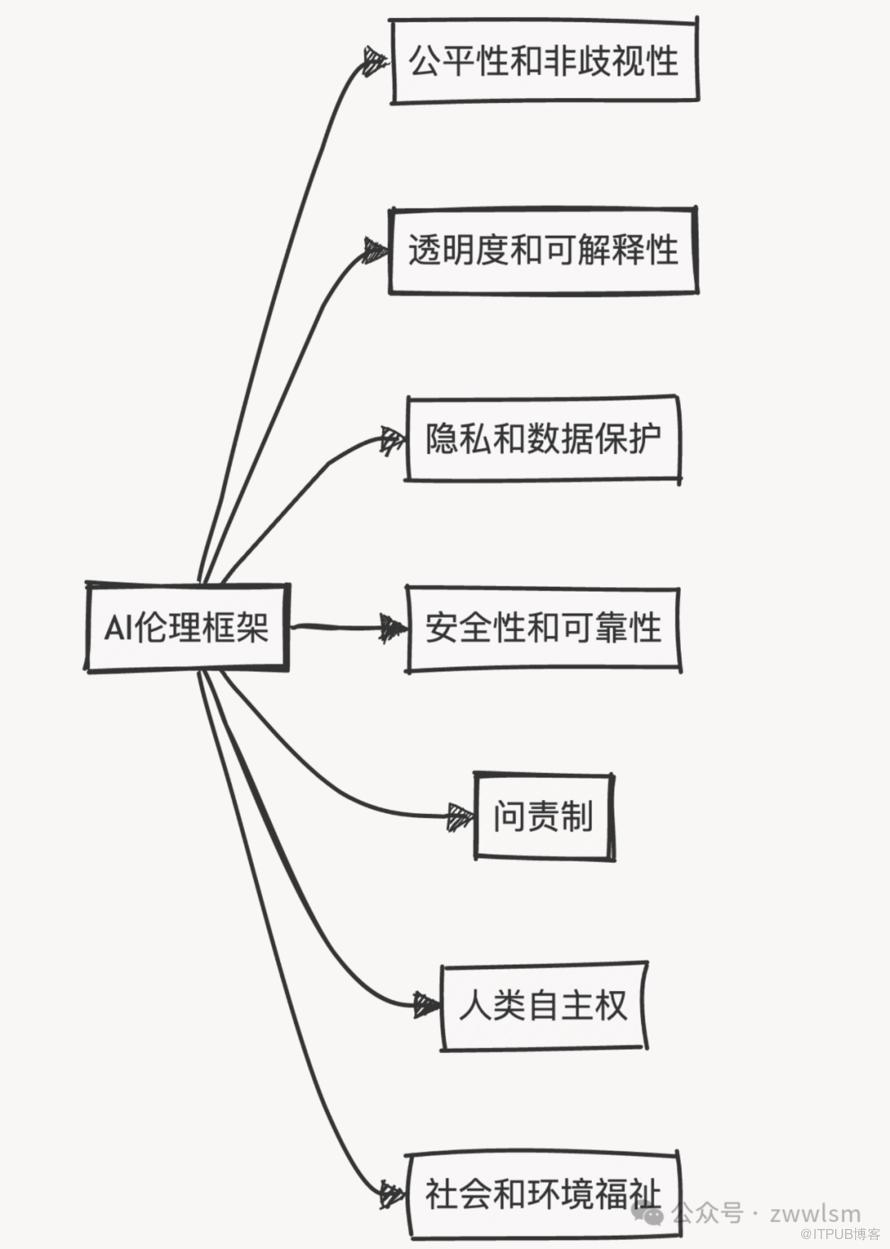
一个有效的AI伦理框架通常包括以下核心原则:
公平性和非歧视性:AI系统应该公平对待所有个体,不因种族、性别、年龄等因素产生偏见。 透明度和可解释性:AI系统的决策过程应该是透明的,能够向利益相关者解释。 隐私和数据保护:尊重用户隐私,保护个人数据。 安全性和可靠性:AI系统应该是安全可靠的,不对用户或社会造成harm。 问责制:应该明确AI系统的责任归属,确保可追责。 人类自主权:AI系统应该增强而不是取代人类的决策能力。 社会和环境福祉:AI的发展应该有利于整个社会和环境的福祉。
3. 在提示工程中实施伦理框架
现在,让我们探讨如何在提示工程的实践中实施这些伦理原则。
3.1 公平性和非歧视性
在提示设计中,我们需要特别注意避免引入或强化偏见。
def fairness_check(prompt, sensitive_attributes):
    fairness_prompt = f"""
    Analyze the following prompt for potential biases or discrimination based on these sensitive attributes: {', '.join(sensitive_attributes)}

    Prompt: "{prompt}"

    For each sensitive attribute, provide:
    1. Whether there's potential bias
    2. How it might manifest
    3. Suggestions for mitigation

    Analysis:
    """

    response = openai.Completion.create(
        engine="text-davinci-002",
        prompt=fairness_prompt,
        max_tokens=300,
        temperature=0.7
    )

    return response.choices[0].text.strip()

# 使用示例
prompt = "Generate a description of a successful entrepreneur."
sensitive_attributes = ["gender", "race", "age"]

fairness_analysis = fairness_check(prompt, sensitive_attributes)
print(fairness_analysis)
这个例子展示了如何分析提示中可能存在的偏见,并提供改进建议。
3.2 透明度和可解释性
为了提高AI系统的透明度,我们可以设计提示来生成决策解释。
def explainable_decision(decision, context):
    explanation_prompt = f"""
    Decision: {decision}
    Context: {context}

    Provide a clear and detailed explanation for this decision, addressing:
    1. Key factors considered
    2. Reasoning process
    3. Potential alternatives
    4. Limitations of the decision

    Explanation:
    """

    response = openai.Completion.create(
        engine="text-davinci-002",
        prompt=explanation_prompt,
        max_tokens=250,
        temperature=0.7
    )

    return response.choices[0].text.strip()

# 使用示例
decision = "Approve the loan application"
context = "Applicant has a stable income, good credit score, but a high debt-to-income ratio"

explanation = explainable_decision(decision, context)
print(explanation)
这个函数生成了AI决策的详细解释,提高了系统的透明度和可解释性。
3.3 隐私和数据保护
在提示工程中,我们需要确保不会无意中泄露敏感信息。
import re

def privacy_protection(text):
    # 简单的模式匹配来检测常见的敏感信息
    patterns = {
        'email': r'\b[A-Za-z0-9._%+-]+@[A-Za-z0-9.-]+\.[A-Z|a-z]{2,}\b',
        'phone': r'\b\d{3}[-.]?\d{3}[-.]?\d{4}\b',
        'ssn': r'\b\d{3}-\d{2}-\d{4}\b',
        'credit_card': r'\b(?:\d{4}[-\s]?){3}\d{4}\b'
    }

    for key, pattern in patterns.items():
        text = re.sub(pattern, f'[REDACTED {key.upper()}]', text)

    return text

def privacy_aware_prompt(original_prompt, user_input):
    safe_input = privacy_protection(user_input)
    prompt = f"""
    Original prompt: {original_prompt}

    User input (with sensitive information redacted): {safe_input}

    Respond to the user's input based on the original prompt, but do not refer to or use any redacted information.

    Response:
    """

    response = openai.Completion.create(
        engine="text-davinci-002",
        prompt=prompt,
        max_tokens=200,
        temperature=0.7
    )

    return response.choices[0].text.strip()

# 使用示例
original_prompt = "Provide a summary of the user's information"
user_input = "My name is John Doe, my email is john@example.com, and my phone number is 123-456-7890"

safe_response = privacy_aware_prompt(original_prompt, user_input)
print(safe_response)
这个例子展示了如何在处理用户输入时保护敏感信息,确保AI系统不会泄露隐私数据。
3.4 安全性和可靠性
确保AI系统的输出是安全可靠的至关重要。我们可以实施安全检查来过滤潜在的有害内容。
def safety_check(ai_output):
    safety_prompt = f"""
    Analyze the following AI output for any potential safety issues:

    AI Output: "{ai_output}"

    Check for:
    1. Explicit or violent content
    2. Encouragement of illegal activities
    3. Potentially harmful advice
    4. Misinformation or factual inaccuracies

    If any issues are found, provide a warning and suggestion for improvement. If no issues are found, state that the output appears safe.

    Analysis:
    """

    response = openai.Completion.create(
        engine="text-davinci-002",
        prompt=safety_prompt,
        max_tokens=200,
        temperature=0.7
    )

    return response.choices[0].text.strip()

# 使用示例
ai_output = "To relieve stress, you could try deep breathing exercises or take a short walk outside."

safety_analysis = safety_check(ai_output)
print(safety_analysis)
这个函数对AI输出进行安全性检查,确保内容不会对用户造成潜在harm。
3.5 问责制
为了实现问责制,我们需要跟踪AI系统的决策过程。
import uuid
import json
from datetime import datetime

class AccountableAI:
    def __init__(self):
        self.decision_log = []

    def make_decision(self, input_data, context):
        decision_id = str(uuid.uuid4())
        timestamp = datetime.now().isoformat()

        prompt = f"""
        Input: {input_data}
        Context: {context}

        Make a decision based on the input and context. Provide your reasoning.

        Decision:
        """

        response = openai.Completion.create(
            engine="text-davinci-002",
            prompt=prompt,
            max_tokens=200,
            temperature=0.7
        )

        decision = response.choices[0].text.strip()

        log_entry = {
            "decision_id": decision_id,
            "timestamp": timestamp,
            "input": input_data,
            "context": context,
            "decision": decision
        }

        self.decision_log.append(log_entry)

        return decision_id, decision

    def get_decision_log(self, decision_id):
        for entry in self.decision_log:
            if entry["decision_id"] == decision_id:
                return json.dumps(entry, indent=2)
        return "Decision not found"

# 使用示例
ai_system = AccountableAI()

input_data = "Customer requesting a refund for a product purchased 45 days ago"
context = "Company policy allows refunds within 30 days of purchase"

decision_id, decision = ai_system.make_decision(input_data, context)
print(f"Decision: {decision}")
print("\nDecision Log:")
print(ai_system.get_decision_log(decision_id))
这个类实现了一个可追责的AI系统,记录每个决策的详细信息,便于后续审查和解释。
4. 处理道德困境
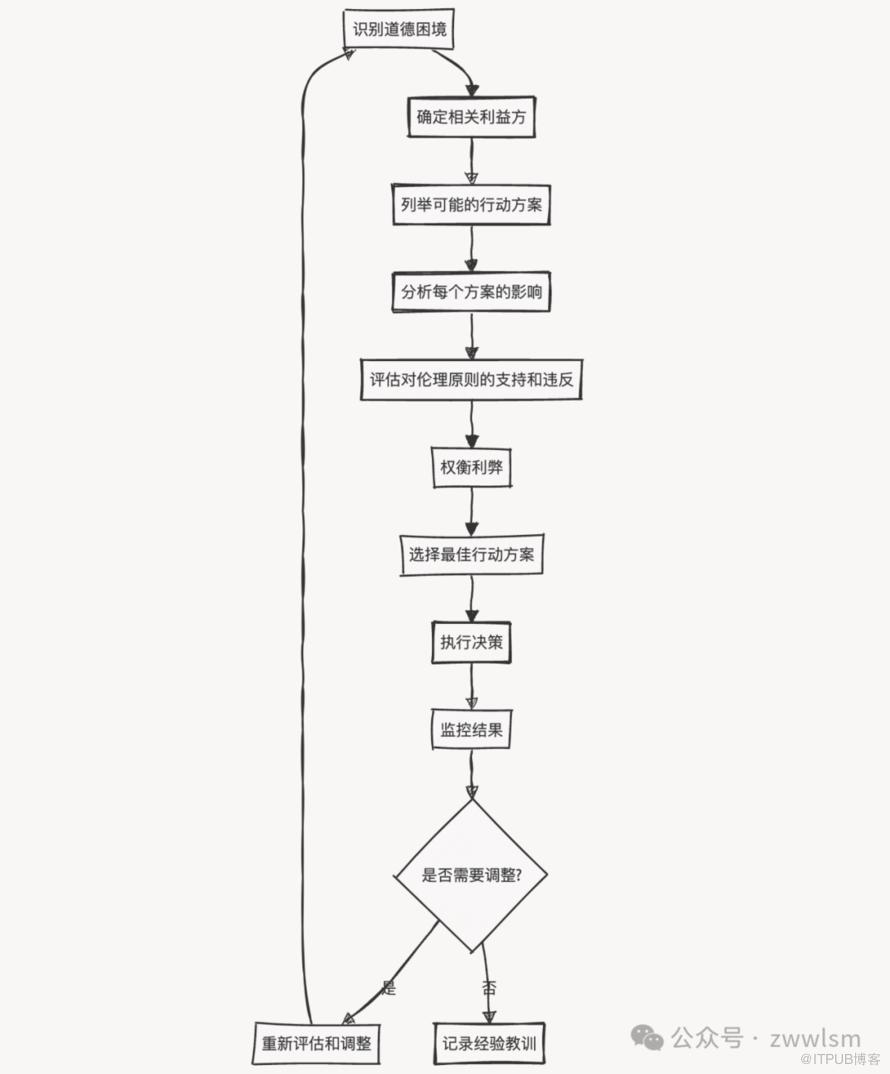
在实际应用中,AI系统常常会遇到复杂的道德困境。以下是一个框架,用于分析和解决这些困境。
def ethical_dilemma_analysis(scenario, stakeholders, options):
    analysis_prompt = f"""
    Ethical Dilemma Scenario: {scenario}

    Stakeholders involved: {', '.join(stakeholders)}

    Potential actions:
    {' '.join([f"{i+1}. {option}" for i, option in enumerate(options)])}

    For each potential action, provide:
    1. Potential positive consequences
    2. Potential negative consequences
    3. Ethical principles supported
    4. Ethical principles violated

    Then, recommend the most ethical course of action and explain your reasoning.

    Analysis:
    """

    response = openai.Completion.create(
        engine="text-davinci-002",
        prompt=analysis_prompt,
        max_tokens=500,
        temperature=0.7
    )

    return response.choices[0].text.strip()

# 使用示例
scenario = "An autonomous vehicle must decide whether to swerve and hit one pedestrian to avoid hitting five pedestrians"
stakeholders = ["Pedestrians", "Vehicle occupants", "Vehicle manufacturer", "Society at large"]
options = ["Swerve and hit one pedestrian", "Continue straight and hit five pedestrians", "Attempt to brake and minimize impact"]

analysis = ethical_dilemma_analysis(scenario, stakeholders, options)
print(analysis)
这个函数提供了一个结构化的方法来分析道德困境,考虑不同的选项和它们对各方利益相关者的影响。
5. 持续的伦理评估
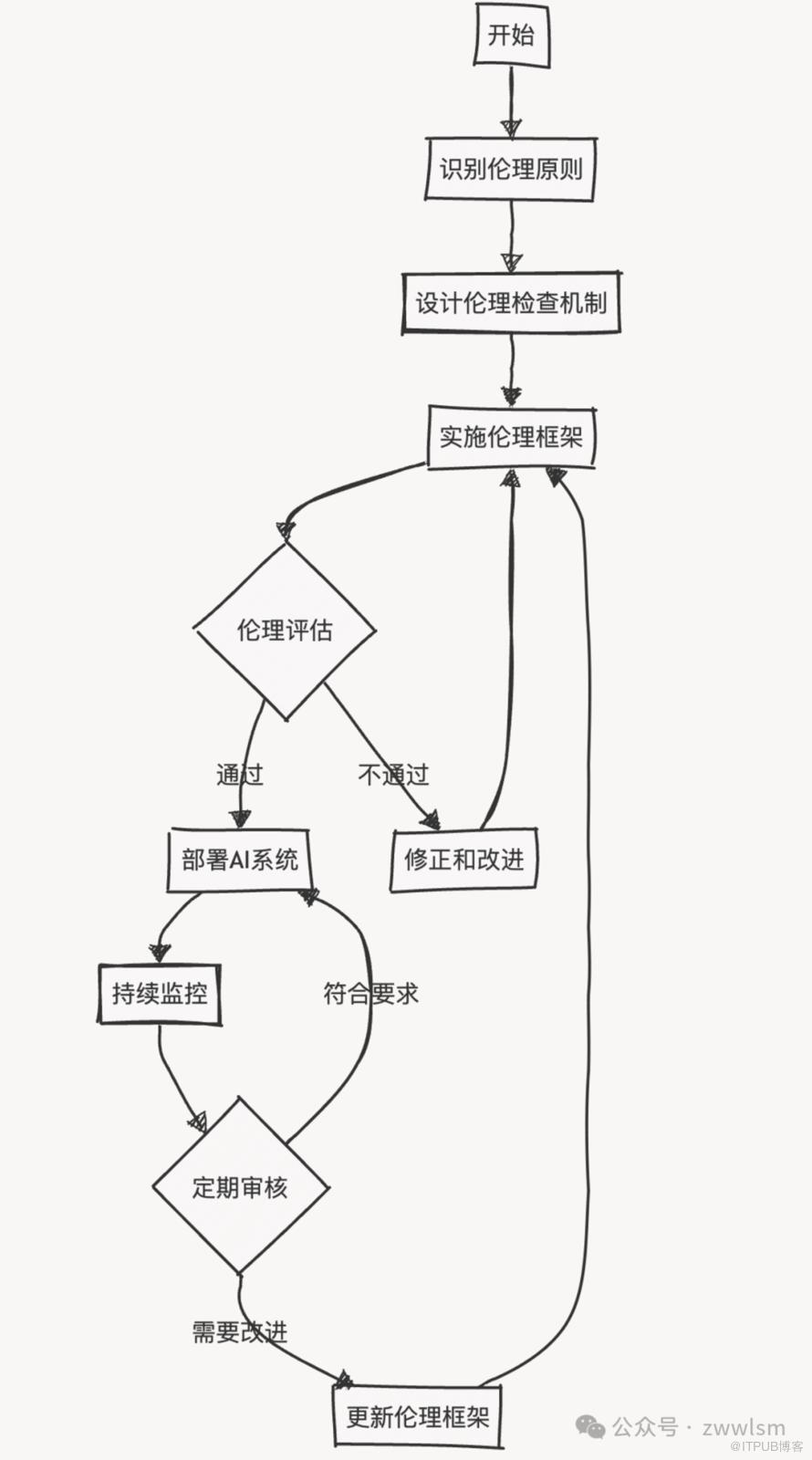
伦理实践不是一次性的工作,而是需要持续的评估和改进。以下是一个定期伦理审计的框架。
def ethical_audit(system_description, recent_decisions, user_feedback):
    audit_prompt = f"""
    Conduct an ethical audit of the AI system based on the following information:

    System Description: {system_description}

    Recent Decisions:
    {recent_decisions}

    User Feedback:
    {user_feedback}

    Evaluate the system's performance in terms of:
    1. Fairness and non-discrimination
    2. Transparency and explainability
    3. Privacy and data protection
    4. Safety and reliability
    5. Accountability
    6. Respect for human autonomy
    7. Promotion of social and environmental well-being

    For each aspect:
    - Provide a rating (1-10)
    - Highlight strengths and weaknesses
    - Suggest improvements

    Overall Ethical Assessment:
    """

    response = openai.Completion.create(
        engine="text-davinci-002",
        prompt=audit_prompt,
        max_tokens=500,
        temperature=0.7
    )

    return response.choices[0].text.strip()

# 使用示例
system_description = "AI-powered customer service chatbot for a large e-commerce platform"
recent_decisions = """
1. Recommended a refund for a customer with a valid complaint
2. Denied a refund request for an item damaged during customer use
3. Escalated a complex query to a human operator
"""
user_feedback = """
- "The chatbot was helpful and solved my problem quickly"
- "I felt the chatbot didn't understand my cultural background"
- "The explanations for denied requests could be clearer"
"""

audit_result = ethical_audit(system_description, recent_decisions, user_feedback)
print(audit_result)
这个函数实现了一个全面的伦理审计,评估AI系统在各个伦理方面的表现,并提供改进建议。
6. 实际应用案例:道德感知型AI助手
!https://cdn.nlark.com/yuque/0/2024/png/406504/1721312460284-b4a846f0-80da-44a1-981e-10542832f592.png
让我们通过一个实际的应用案例来综合运用我们学到的伦理框架实施技术。我们将创建一个道德感知型AI助手,它能够在回答用户查询时考虑伦理影响。
import openai

class EthicalAIAssistant:
    def __init__(self):
        self.ethical_principles = [
            "Respect for human rights and dignity",
            "Fairness and non-discrimination",
            "Transparency and explainability",
            "Safety and reliability",
            "Privacy and data protection",
            "Promotion of human values",
            "Accountability"
        ]

    def ethical_response(self, user_query):
        prompt = f"""
        User Query: {user_query}

        As an AI assistant committed to ethical behavior, consider the following principles before responding:
        {', '.join(self.ethical_principles)}

        Provide a response that:
        1. Answers the user's query
        2. Considers the ethical implications
        3. Offers alternatives if the original request raises ethical concerns
        4. Explains any ethical considerations to the user

        Your response:
        """

        response = openai.Completion.create(
            engine="text-davinci-002",
            prompt=prompt,
            max_tokens=300,
            temperature=0.7
        )

        return response.choices[0].text.strip()

    def ethical_analysis(self, user_query, ai_response):
        analysis_prompt = f"""
        User Query: {user_query}
        AI Response: {ai_response}

        Conduct an ethical analysis of the AI's response:
        1. Identify which ethical principles were considered
        2. Evaluate how well the response adhered to these principles
        3. Suggest any improvements for future responses

        Ethical Analysis:
        """

        response = openai.Completion.create(
            engine="text-davinci-002",
            prompt=analysis_prompt,
            max_tokens=200,
            temperature=0.7
        )

        return response.choices[0].text.strip()

# 使用示例
assistant = EthicalAIAssistant()

queries = [
    "How can I make a lot of money quickly?",
    "Can you help me access my neighbor's Wi-Fi without their permission?",
    "What's the best way to lose weight fast?",
    "How can I convince my friend to vote for my preferred political candidate?"
]

for query in queries:
    print(f"User Query: {query}")
    response = assistant.ethical_response(query)
    print(f"AI Response: {response}")
    analysis = assistant.ethical_analysis(query, response)
    print(f"Ethical Analysis: {analysis}")
    print("\n" + "="*50 + "\n")
这个EthicalAIAssistant类展示了如何创建一个能够在回答用户查询时考虑伦理影响的AI系统。它包括两个主要方法:
ethical_response: 生成对用户查询的伦理回答。ethical_analysis: 对AI的回答进行伦理分析,以持续改进系统的伦理表现。
这个例子综合了我们讨论过的多个伦理实践:
明确的伦理原则列表指导AI的行为。 在生成回答时考虑伦理影响。 为可能引发伦理问题的请求提供替代方案。 向用户解释相关的伦理考虑。 对AI的回答进行后续的伦理分析,为未来改进提供建议。
7. 伦理框架实施的挑战与解决方案
尽管我们已经讨论了许多实施伦理框架的方法,但在实际应用中仍然面临着一些挑战:
7.1 价值观冲突
挑战:不同的伦理原则可能会相互冲突,需要在它们之间进行权衡。
解决方案:
建立一个清晰的价值观优先级系统 使用多标准决策分析方法 在复杂情况下引入人类专家决策
def value_conflict_resolution(scenario, conflicting_values):
    resolution_prompt = f"""
    Scenario: {scenario}

    Conflicting Values: {', '.join(conflicting_values)}

    Analyze this ethical dilemma:
    1. Explain how each value applies to the scenario
    2. Identify the key points of conflict between these values
    3. Propose a resolution that best balances these competing values
    4. Justify your proposed resolution

    Resolution Analysis:
    """

    response = openai.Completion.create(
        engine="text-davinci-002",
        prompt=resolution_prompt,
        max_tokens=300,
        temperature=0.7
    )

    return response.choices[0].text.strip()

# 使用示例
scenario = "A self-driving car must choose between protecting its passengers or minimizing harm to pedestrians in an unavoidable accident."
conflicting_values = ["Passenger safety", "Minimizing overall harm", "Equal value of all human lives"]

resolution = value_conflict_resolution(scenario, conflicting_values)
print(resolution)
7.2 文化差异
挑战:不同文化背景对伦理问题的理解可能有很大差异。
解决方案:
实施文化适应性伦理框架 在设计团队中纳入多元文化视角 提供文化背景相关的伦理决策选项
def culturally_adaptive_ethics(scenario, cultures):
    adaptive_prompt = f"""
    Scenario: {scenario}

    Analyze this scenario from the perspective of each of the following cultures:
    {', '.join(cultures)}

    For each culture:
    1. Describe how this culture might typically view the ethical implications of this scenario
    2. Identify any unique ethical considerations specific to this culture
    3. Suggest an ethically appropriate response or solution aligned with this culture's values

    Cultural Ethical Analysis:
    """

    response = openai.Completion.create(
        engine="text-davinci-002",
        prompt=adaptive_prompt,
        max_tokens=400,
        temperature=0.7
    )

    return response.choices[0].text.strip()

# 使用示例
scenario = "A company is considering using AI for employee performance evaluation."
cultures = ["Western", "Eastern", "Middle Eastern"]

cultural_analysis = culturally_adaptive_ethics(scenario, cultures)
print(cultural_analysis)
7.3 伦理决策的动态性
挑战:伦理标准可能随时间变化,AI系统需要适应这些变化。
解决方案:
实施持续学习的伦理框架 定期更新伦理指南和训练数据 建立伦理反馈循环机制
class AdaptiveEthicalAI:
    def __init__(self):
        self.ethical_guidelines = []
        self.feedback_history = []

    def update_guidelines(self, new_guideline):
        self.ethical_guidelines.append(new_guideline)

    def receive_feedback(self, decision, feedback):
        self.feedback_history.append({"decision": decision, "feedback": feedback})

    def make_decision(self, scenario):
        decision_prompt = f"""
        Scenario: {scenario}

        Current Ethical Guidelines:
        {' '.join([f"{i+1}. {g}" for i, g in enumerate(self.ethical_guidelines)])}

        Recent Feedback:
        {' '.join([f"Decision: {f['decision']}, Feedback: {f['feedback']}" for f in self.feedback_history[-5:]])}

        Based on the current guidelines and recent feedback, make an ethical decision for this scenario.
        Explain your reasoning.

        Decision:
        """

        response = openai.Completion.create(
            engine="text-davinci-002",
            prompt=decision_prompt,
            max_tokens=200,
            temperature=0.7
        )

        return response.choices[0].text.strip()

# 使用示例
ai = AdaptiveEthicalAI()
ai.update_guidelines("Prioritize user privacy")
ai.update_guidelines("Ensure fairness in decision-making")

ai.receive_feedback("Shared user data for research", "Negative - violated privacy")
ai.receive_feedback("Used anonymized data for improvement", "Positive - maintained privacy while improving service")

scenario = "A new feature could greatly improve service quality but requires collecting more user data."

decision = ai.make_decision(scenario)
print(decision)
8. 未来展望
随着AI技术的不断发展,伦理框架的实施也将面临新的挑战和机遇。以下是一些值得关注的未来趋势:
自适应伦理AI:能够根据社会价值观的变化自动调整其伦理框架的AI系统。 分布式伦理决策:多个AI系统协作进行伦理决策,平衡不同的观点和考虑因素。 伦理元学习:AI系统能够从过去的伦理决策中学习,不断完善其伦理推理能力。 情境感知伦理:能够根据具体情境动态调整伦理决策的AI系统。 人机协作伦理:AI系统和人类专家协作解决复杂的伦理问题,结合人工智能的处理能力和人类的道德直觉。
9. 结语
在AI技术日益普及的今天,将伦理框架切实地应用到提示工程和AI系统开发中变得至关重要。通过本文介绍的技术和最佳实践,我们可以开始构建更加负责任、公平和透明的AI系统。
然而,伦理框架的实施是一个持续的过程,需要我们不断反思、学习和调整。作为AI从业者,我们有责任不仅要关注技术创新,还要确保这些创新能够为社会带来积极的影响。
欢迎加入群聊,一起探索 AIGC 的故事~

原文作者:芝士AI吃鱼;如有侵权,请联系管理员删除。

