我是芝士AI吃鱼,原创 NLP、LLM、超长文知识分享
热爱分享前沿技术知识,寻找志同道合小伙伴
公众号 :芝士AI吃鱼
欢迎来到我们提示工程系列的第九篇文章。在之前的文章中,我们探讨了如何在实际项目中实施AI伦理框架。今天,我们将把视野扩展到更广阔的领域:AI监管。随着AI技术的快速发展和广泛应用,各国政府和国际组织都在积极制定和完善AI监管政策。这些政策将对AI的开发和应用产生深远影响,包括我们的提示工程实践。让我们一起探索这个新时代的挑战和机遇。
1. AI监管的全球格局
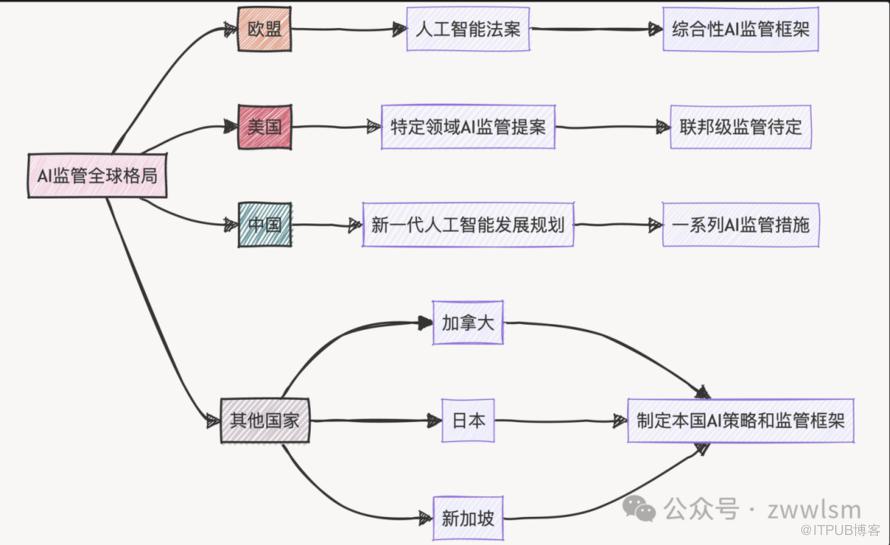
在深入技术细节之前,让我们先了解当前AI监管的全球格局:
欧盟:提出了《人工智能法案》(AI Act),旨在建立世界上第一个综合性的AI监管框架。 美国:虽然尚未出台全面的联邦级AI法规,但已有多项针对特定领域的AI监管提案。 中国:发布了《新一代人工智能发展规划》,并实施了一系列AI监管措施。 其他国家:如加拿大、日本、新加坡等也在积极制定本国的AI策略和监管框架。
2. 主要监管重点
AI监管通常涉及以下几个关键方面:
透明度和可解释性 公平性和非歧视性 隐私和数据保护 安全性和可靠性 问责制和人类监督 环境和社会影响
3. 监管对提示工程的影响
现在,让我们探讨这些监管趋势如何具体影响提示工程实践。

3.1 透明度和可解释性
监管要求AI系统的决策过程应该是透明和可解释的。这对提示工程提出了新的挑战。
def transparent_prompt(task, context):
    prompt = f"""
    Task: {task}
    Context: {context}

    As an AI assistant committed to transparency, your response should:
    1. Clearly state the assumptions you're making
    2. Explain your reasoning process step by step
    3. Highlight any limitations or uncertainties in your response
    4. Provide sources or references where applicable

    Your transparent response:
    """

    response = openai.Completion.create(
        engine="text-davinci-002",
        prompt=prompt,
        max_tokens=300,
        temperature=0.7
    )

    return response.choices[0].text.strip()

# 使用示例
task = "Recommend an investment strategy for a retirement portfolio"
context = "Client is 35 years old with moderate risk tolerance"

transparent_recommendation = transparent_prompt(task, context)
print(transparent_recommendation)
这个例子展示了如何设计提示以生成更透明和可解释的AI输出。
3.2 公平性和非歧视性
监管机构越来越关注AI系统的公平性。我们需要在提示设计中明确考虑这一点。
def fairness_aware_prompt(task, sensitive_attributes):
    prompt = f"""
    Task: {task}
    Sensitive attributes to consider: {', '.join(sensitive_attributes)}

    As an AI assistant committed to fairness, your response should:
    1. Avoid perpetuating stereotypes or biases related to the sensitive attributes
    2. Ensure equal treatment regardless of these attributes
    3. Consider diverse perspectives and experiences
    4. Highlight any potential fairness concerns in your response

    Your fair and unbiased response:
    """

    response = openai.Completion.create(
        engine="text-davinci-002",
        prompt=prompt,
        max_tokens=300,
        temperature=0.7
    )

    return response.choices[0].text.strip()

# 使用示例
task = "Describe the characteristics of a successful leader"
sensitive_attributes = ["gender", "race", "age"]

fair_description = fairness_aware_prompt(task, sensitive_attributes)
print(fair_description)
这个函数展示了如何在提示中明确指出需要考虑的敏感属性,以生成更公平的AI输出。
3.3 隐私和数据保护
随着GDPR等隐私法规的实施,在提示工程中保护个人数据变得至关重要。
import re

def privacy_preserving_prompt(user_query, personal_data):
    # 移除个人身份信息
    for key, value in personal_data.items():
        user_query = re.sub(value, f"[REDACTED {key}]", user_query)

    prompt = f"""
    User query (with personal information redacted): {user_query}

    As an AI assistant committed to privacy protection:
    1. Do not attempt to recover or guess the redacted information
    2. Provide a helpful response without using any personal data
    3. If the task cannot be completed without the redacted information, explain why and suggest alternatives

    Your privacy-preserving response:
    """

    response = openai.Completion.create(
        engine="text-davinci-002",
        prompt=prompt,
        max_tokens=200,
        temperature=0.7
    )

    return response.choices[0].text.strip()

# 使用示例
user_query = "My name is John Doe and my email is john@example.com. Can you help me reset my password?"
personal_data = {
    "NAME": "John Doe",
    "EMAIL": "john@example.com"
}

private_response = privacy_preserving_prompt(user_query, personal_data)
print(private_response)
这个例子展示了如何在处理用户查询时保护个人信息,同时仍然提供有用的响应。
3.4 安全性和可靠性
监管要求AI系统必须是安全和可靠的。我们需要在提示中加入安全检查和错误处理机制。
def safe_and_reliable_prompt(task, safety_checks):
    prompt = f"""
    Task: {task}

    As an AI assistant committed to safety and reliability, before providing your response:
    {' '.join([f"{i+1}. {check}" for i, check in enumerate(safety_checks)])}

    If any safety check fails, explain the issue and provide a safe alternative.
    If all checks pass, provide your response along with any relevant safety warnings or precautions.

    Your safe and reliable response:
    """

    response = openai.Completion.create(
        engine="text-davinci-002",
        prompt=prompt,
        max_tokens=300,
        temperature=0.7
    )

    return response.choices[0].text.strip()

# 使用示例
task = "Provide instructions for cleaning a kitchen oven"
safety_checks = [
    "Ensure all steps are safe for home use",
    "Warn about potential hazards (e.g., chemical fumes)",
    "Include proper protective equipment recommendations",
    "Advise on safe disposal of cleaning materials"
]

safe_instructions = safe_and_reliable_prompt(task, safety_checks)
print(safe_instructions)
这个函数展示了如何在提示中加入安全检查,以确保AI系统生成的内容是安全和可靠的。
3.5 问责制和人类监督
监管通常要求保持人类对AI系统的监督。我们可以在提示中加入人类反馈循环。
class AccountableAI:
    def __init__(self):
        self.decisions = []

    def make_decision(self, scenario):
        prompt = f"""
        Scenario: {scenario}

        As an AI assistant subject to human oversight:
        1. Analyze the scenario
        2. Propose a decision
        3. Explain your reasoning
        4. Identify any areas where human review might be necessary

        Your accountable decision:
        """

        response = openai.Completion.create(
            engine="text-davinci-002",
            prompt=prompt,
            max_tokens=300,
            temperature=0.7
        )

        decision = response.choices[0].text.strip()
        self.decisions.append({"scenario": scenario, "decision": decision, "human_reviewed": False})
        return decision

    def human_review(self, decision_index, review):
        if 0 <= decision_index < len(self.decisions):
            self.decisions[decision_index]["human_reviewed"] = True
            self.decisions[decision_index]["human_review"] = review
            return "Review recorded successfully."
        else:
            return "Invalid decision index."

# 使用示例
ai = AccountableAI()

scenario = "A customer has requested a refund for a digital product they've used for 30 days. Our policy typically allows refunds only within 14 days of purchase."

decision = ai.make_decision(scenario)
print("AI Decision:", decision)

human_review = "Decision approved. In this case, we'll make an exception to our policy to maintain customer goodwill."
print(ai.human_review(0, human_review))
这个类展示了如何实现一个可问责的AI系统,它不仅记录决策,还允许人类审查和干预。
4. 应对策略
面对日益严格的AI监管,我们需要调整我们的提示工程实践。以下是一些策略:
4.1 监管合规检查器
我们可以创建一个工具来检查我们的提示是否符合主要的监管要求。
def regulatory_compliance_check(prompt, regulations):
    compliance_prompt = f"""
    Analyze the following prompt for compliance with these regulations:
    {' '.join([f"{i+1}. {reg}" for i, reg in enumerate(regulations)])}

    Prompt to analyze: "{prompt}"

    For each regulation:
    1. Determine if the prompt is compliant
    2. If not compliant, explain why
    3. Suggest modifications to achieve compliance

    Compliance analysis:
    """

    response = openai.Completion.create(
        engine="text-davinci-002",
        prompt=compliance_prompt,
        max_tokens=400,
        temperature=0.7
    )

    return response.choices[0].text.strip()

# 使用示例
prompt = "Generate a customer profile based on their purchase history and browsing behavior"
regulations = [
    "GDPR: Ensure data minimization and purpose limitation",
    "CCPA: Provide opt-out options for data collection",
    "AI Ethics: Avoid unfair bias in profiling"
]

compliance_report = regulatory_compliance_check(prompt, regulations)
print(compliance_report)
这个函数可以帮助我们评估和改进提示,以确保它们符合相关的监管要求。
4.2 动态监管适应
考虑到监管环境的不断变化,我们可以创建一个系统来动态更新我们的提示以适应新的规定。
class AdaptiveRegulatoryAI:
    def __init__(self):
        self.regulations = {}
        self.prompts = {}

    def update_regulation(self, name, description):
        self.regulations[name] = description
        self._update_affected_prompts(name)

    def add_prompt(self, name, template):
        self.prompts[name] = template
        self._update_prompt(name)

    def _update_prompt(self, prompt_name):
        template = self.prompts[prompt_name]
        current_regulations = ' '.join(self.regulations.values())

        update_prompt = f"""
        Original prompt template: {template}

        Current regulations:
        {current_regulations}

        Update the prompt template to comply with all current regulations while maintaining its original purpose.

        Updated prompt template:
        """

        response = openai.Completion.create(
            engine="text-davinci-002",
            prompt=update_prompt,
            max_tokens=300,
            temperature=0.7
        )

        self.prompts[prompt_name] = response.choices[0].text.strip()

    def _update_affected_prompts(self, regulation_name):
        for prompt_name in self.prompts:
            self._update_prompt(prompt_name)

    def get_prompt(self, name):
        return self.prompts.get(name, "Prompt not found")

# 使用示例
ai = AdaptiveRegulatoryAI()

ai.add_prompt("customer_profiling", "Create a detailed customer profile based on all available data")

ai.update_regulation("GDPR", "Ensure data minimization and purpose limitation")
ai.update_regulation("CCPA", "Provide opt-out options for data collection")

updated_prompt = ai.get_prompt("customer_profiling")
print("Updated customer profiling prompt:", updated_prompt)
这个类展示了如何创建一个能够根据新的监管要求自动更新提示的系统。
5. 案例研究:合规性驱动的对话系统
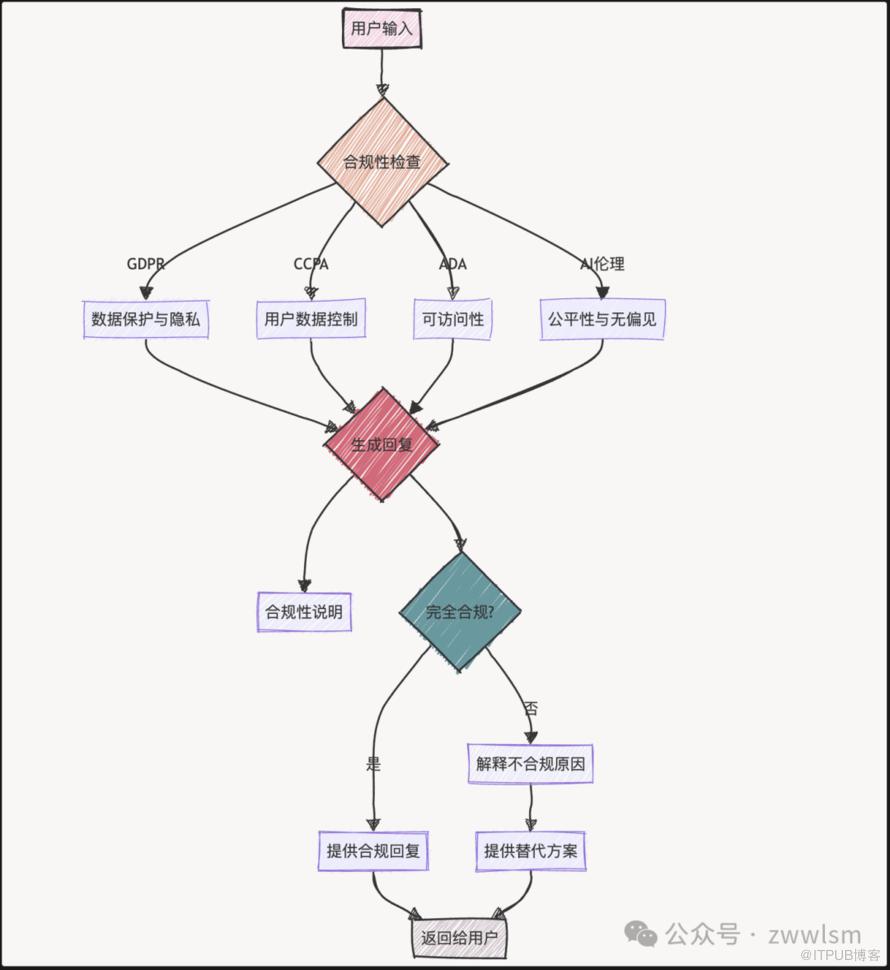
让我们通过一个实际的应用案例来综合运用这些策略。我们将创建一个合规性驱动的对话系统,它能够在与用户交互时遵守多个监管要求。
import openai

class ComplianceAwareBot:
    def __init__(self):
        self.regulations = {
            "GDPR": "Ensure data protection and privacy",
            "CCPA": "Provide user control over personal data",
            "ADA": "Ensure accessibility for all users",
            "AI Ethics": "Maintain fairness and avoid bias"
        }

    def compliant_response(self, user_input):
        prompt = f"""
        User input: {user_input}

        As an AI assistant, provide a response that complies with the following regulations:
        {' '.join([f"{key}: {value}" for key, value in self.regulations.items()])}

        Your response should:
        1. Address the user's input effectively
        2. Explicitly mention how it complies with each regulation
        3. If full compliance is not possible, explain why and suggest alternatives

        Your compliant response:
        """

        response = openai.Completion.create(
            engine="text-davinci-002",
            prompt=prompt,
            max_tokens=300,
            temperature=0.7
        )

        return response.choices[0].text.strip()

    def add_regulation(self, name, description):
        self.regulations[name] = description

    def remove_regulation(self, name):
        self.regulations.pop(
非常感谢您的耐心。让我继续完成这个合规性驱动的对话系统的实现。
    def remove_regulation(self, name):
        self.regulations.pop(name, None)

    def update_regulation(self, name, new_description):
        if name in self.regulations:
            self.regulations[name] = new_description

# 使用示例
bot = ComplianceAwareBot()

user_inputs = [
    "Can you tell me what personal data you have about me?",
    "I need help filing a tax return. Can you guide me through the process?",
    "What's your opinion on the current political situation?",
    "Can you help me create a social media post to promote my business?"
]

for input in user_inputs:
    print(f"User: {input}")
    response = bot.compliant_response(input)
    print(f"Bot: {response}\n")

# 添加新的规定
bot.add_regulation("COPPA", "Ensure protection of children's online privacy")

# 更新现有规定
bot.update_regulation("AI Ethics", "Maintain fairness, avoid bias, and ensure transparency in decision-making")

# 测试新的规定
new_input = "I'm 12 years old. Can you help me set up a social media account?"
print(f"User: {new_input}")
response = bot.compliant_response(new_input)
print(f"Bot: {response}")
这个ComplianceAwareBot类展示了如何创建一个能够在回答用户查询时考虑多个监管要求的AI系统。它的主要特点包括:
维护一个当前适用规定的列表。 在生成回答时考虑所有相关规定。 能够动态添加、删除或更新规定。 在回答中明确说明如何遵守每项规定。 当无法完全遵守时,解释原因并提供替代方案。
这个例子展示了如何将监管合规性直接整合到提示工程中,确保AI系统的输出始终符合最新的法规要求。
6. 监管挑战与机遇
尽管AI监管带来了许多挑战,但它也创造了新的机遇。让我们探讨一些主要的挑战和潜在的解决方案。
6.1 监管的不确定性和变化
挑战:AI监管环境正在快速变化,不同地区的要求可能不同。
解决方案:
实施模块化的提示系统,可以根据不同的监管要求快速调整。 建立监管智能系统,自动跟踪和解释新的监管要求。
class RegulatoryIntelligence:
    def __init__(self):
        self.regulations = {}
        self.regional_variations = {}

    def update_regulation(self, name, description, regions=None):
        self.regulations[name] = description
        if regions:
            self.regional_variations[name] = regions

    def get_applicable_regulations(self, region):
        applicable = {}
        for name, description in self.regulations.items():
            if name not in self.regional_variations or region in self.regional_variations[name]:
                applicable[name] = description
        return applicable

    def generate_compliant_prompt(self, task, region):
        applicable_regulations = self.get_applicable_regulations(region)

        prompt = f"""
        Task: {task}
        Region: {region}

        Generate a prompt that complies with the following regulations:
        {' '.join([f"{key}: {value}" for key, value in applicable_regulations.items()])}

        The prompt should:
        1. Accomplish the given task
        2. Explicitly address compliance with each applicable regulation
        3. Be adaptable to potential future regulatory changes

        Compliant prompt:
        """

        response = openai.Completion.create(
            engine="text-davinci-002",
            prompt=prompt,
            max_tokens=300,
            temperature=0.7
        )

        return response.choices[0].text.strip()

# 使用示例
ri = RegulatoryIntelligence()

ri.update_regulation("GDPR", "Ensure data protection and privacy", ["EU", "UK"])
ri.update_regulation("CCPA", "Provide user control over personal data", ["US-CA"])
ri.update_regulation("PIPL", "Protect personal information and data rights", ["CN"])

task = "Create a user registration form for a global e-commerce platform"

for region in ["EU", "US-CA", "CN"]:
    print(f"Region: {region}")
    compliant_prompt = ri.generate_compliant_prompt(task, region)
    print(f"Compliant Prompt: {compliant_prompt}\n")
这个RegulatoryIntelligence类展示了如何创建一个系统来管理不同地区的监管要求,并生成符合特定地区法规的提示。
6.2 技术限制与监管期望的差距
挑战:某些监管要求可能超出了当前AI技术的能力。
解决方案:
在提示中明确说明AI系统的局限性。 实施人机协作系统,在AI无法满足监管要求时引入人类专家。
def capability_aware_prompt(task, ai_capabilities, regulatory_requirements):
    prompt = f"""
    Task: {task}

    AI System Capabilities:
    {' '.join([f"- {cap}" for cap in ai_capabilities])}

    Regulatory Requirements:
    {' '.join([f"- {req}" for req in regulatory_requirements])}

    Analyze the task, AI capabilities, and regulatory requirements to:
    1. Identify which parts of the task can be fully automated while meeting all regulatory requirements
    2. Highlight areas where AI capabilities fall short of regulatory requirements
    3. Suggest a human-AI collaborative approach to meet all requirements
    4. Provide a clear explanation of the system's limitations to end-users

    Your capability-aware and compliant response:
    """

    response = openai.Completion.create(
        engine="text-davinci-002",
        prompt=prompt,
        max_tokens=400,
        temperature=0.7
    )

    return response.choices[0].text.strip()

# 使用示例
task = "Perform automated credit scoring for loan applications"
ai_capabilities = [
    "Analyze financial data quickly and accurately",
    "Identify patterns in credit history",
    "Calculate risk scores based on multiple factors"
]
regulatory_requirements = [
    "Provide clear explanations for all credit decisions",
    "Ensure non-discrimination in credit scoring",
    "Allow for human review of automated decisions",
    "Maintain data privacy and security"
]

response = capability_aware_prompt(task, ai_capabilities, regulatory_requirements)
print(response)
这个函数展示了如何设计提示以明确AI系统的能力和局限性,同时提出人机协作的方案来满足监管要求。
7. 未来展望
随着AI技术和监管环境的不断发展,我们可以预见一些趋势:
监管沙盒:更多监管机构可能会建立"监管沙盒",允许企业在受控环境中测试创新的AI应用。 自动化合规:AI系统可能会越来越多地用于自动化合规过程,帮助企业更好地遵守复杂的监管要求。 全球协调:可能会出现更多的国际合作,以协调全球AI监管标准。 道德AI认证:可能会出现类似于有机食品认证的"道德AI"认证体系。 持续监管适应:AI系统可能需要具备持续学习和适应新监管要求的能力。
8. 结语
AI监管的新时代为提示工程带来了挑战,但也创造了机遇。通过将合规性考虑直接整合到我们的提示设计中,我们不仅可以满足监管要求,还可以构建更加透明、公平和可信的AI系统。
作为AI从业者,我们需要积极参与到监管对话中来,帮助制定既能保护公众利益又不阻碍创新的平衡政策。同时,我们也要不断提高自己的技能,以适应这个快速变化的领域。
在未来的文章中,我们将探讨如何将这些监管考虑整合到大规模AI系统的开发和部署中。我们还将深入研究如何构建能够自我审计和持续改进的AI系统。敬请期待!

原文作者:芝士AI吃鱼;如有侵权,请联系管理员删除。

