RUN
我们通过源码来看kube-controller-manger 的运行机制,从主函数找到run函数
func Run(c *config.CompletedConfig, stopCh <-chan struct{}) error {// configz 模块,用于收集、组织、甚至动态更新各种组件的配置信息if cfgz, err := configz.New(ConfigzName); err == nil {cfgz.Set(c.ComponentConfig)} else {klog.Errorf("unable to register configz: %v", err)}// 健康监测与http服务,跳过var checks []healthz.HealthCheckervar unsecuredMux *mux.PathRecorderMuxrun := func(ctx context.Context) {rootClientBuilder := controller.SimpleControllerClientBuilder{ClientConfig: c.Kubeconfig,}// client认证相关var clientBuilder controller.ControllerClientBuilder// 创建controller的上下文contextcontrollerContext, err := CreateControllerContext(c, rootClientBuilder, clientBuilder, ctx.Done())if err != nil {klog.Fatalf("error building controller context: %v", err)}saTokenControllerInitFunc := serviceAccountTokenControllerStarter{rootClientBuilder: rootClientBuilder}.startServiceAccountTokenControllerif err := StartControllers(controllerContext, saTokenControllerInitFunc, NewControllerInitializers(controllerContext.LoopMode), unsecuredMux); err != nil {klog.Fatalf("error starting controllers: %v", err)}// 这里的 InformerFactory和kube-scheduler中看的 SharedInformerFactory 基本一致//主要功能是构造Kubernetes中所有对象的Informer。每个SharedInformer实际上只负责一种对象类型,如Pod、Node等//SharedInformerFactory被用来创建和管理这些Informer,使得kube-scheduler能够监听并响应这些对象的状态变化controllerContext.InformerFactory.Start(controllerContext.Stop)controllerContext.ObjectOrMetadataInformerFactory.Start(controllerContext.Stop)close(controllerContext.InformersStarted)select {}}// 是否进行选举if !c.ComponentConfig.Generic.LeaderElection.LeaderElect {run(context.TODO())panic("unreachable")}// 拼接出一个全局唯一的idid, err := os.Hostname()if err != nil {return err}id = id + "_" + string(uuid.NewUUID())rl, err := resourcelock.New(c.ComponentConfig.Generic.LeaderElection.ResourceLock,c.ComponentConfig.Generic.LeaderElection.ResourceNamespace,c.ComponentConfig.Generic.LeaderElection.ResourceName,c.LeaderElectionClient.CoreV1(),c.LeaderElectionClient.CoordinationV1(),resourcelock.ResourceLockConfig{Identity: id,EventRecorder: c.EventRecorder,})if err != nil {klog.Fatalf("error creating lock: %v", err)}// 正常情况下都是阻塞在RunOrDie这个函数中,不停地进行选举相关的工作leaderelection.RunOrDie(context.TODO(), leaderelection.LeaderElectionConfig{Lock: rl,LeaseDuration: c.ComponentConfig.Generic.LeaderElection.LeaseDuration.Duration,RenewDeadline: c.ComponentConfig.Generic.LeaderElection.RenewDeadline.Duration,RetryPeriod: c.ComponentConfig.Generic.LeaderElection.RetryPeriod.Duration,Callbacks: leaderelection.LeaderCallbacks{// 开始成为Leader的时候,调用run函数OnStartedLeading: run,OnStoppedLeading: func() {klog.Fatalf("leaderelection lost")},},WatchDog: electionChecker,Name: "kube-controller-manager",})panic("unreachable")}

StartControllers
func StartControllers(ctx ControllerContext, startSATokenController InitFunc, controllers map[string]InitFunc, unsecuredMux *mux.PathRecorderMux) error {// 关键性的循环,启动每个controllers,key为控制器名字,value为初始化函数for controllerName, initFn := range controllers {// 是否允许启动if !ctx.IsControllerEnabled(controllerName) {klog.Warningf("%q is disabled", controllerName)continue}time.Sleep(wait.Jitter(ctx.ComponentConfig.Generic.ControllerStartInterval.Duration, ControllerStartJitter))klog.V(1).Infof("Starting %q", controllerName)// 调用init函数进行启动debugHandler, started, err := initFn(ctx)if err != nil {klog.Errorf("Error starting %q", controllerName)return err}if !started {klog.Warningf("Skipping %q", controllerName)continue}// 注册对应controller到debug的url中if debugHandler != nil && unsecuredMux != nil {basePath := "/debug/controllers/" + controllerNameunsecuredMux.UnlistedHandle(basePath, http.StripPrefix(basePath, debugHandler))unsecuredMux.UnlistedHandlePrefix(basePath+"/", http.StripPrefix(basePath, debugHandler))}klog.Infof("Started %q", controllerName)}return nil}// 我们再去传入controller的函数去看看,对应的controller有哪些,具体的含义我就不说了,都是常见额资源控制器func NewControllerInitializers(loopMode ControllerLoopMode) map[string]InitFunc {controllers := map[string]InitFunc{}controllers["endpoint"] = startEndpointControllercontrollers["endpointslice"] = startEndpointSliceControllercontrollers["endpointslicemirroring"] = startEndpointSliceMirroringControllercontrollers["replicationcontroller"] = startReplicationControllercontrollers["podgc"] = startPodGCControllercontrollers["resourcequota"] = startResourceQuotaControllercontrollers["namespace"] = startNamespaceControllercontrollers["serviceaccount"] = startServiceAccountControllercontrollers["garbagecollector"] = startGarbageCollectorControllercontrollers["daemonset"] = startDaemonSetControllercontrollers["job"] = startJobControllercontrollers["deployment"] = startDeploymentControllercontrollers["replicaset"] = startReplicaSetControllercontrollers["horizontalpodautoscaling"] = startHPAControllercontrollers["disruption"] = startDisruptionControllercontrollers["statefulset"] = startStatefulSetControllercontrollers["cronjob"] = startCronJobControllercontrollers["csrsigning"] = startCSRSigningControllercontrollers["csrapproving"] = startCSRApprovingControllercontrollers["csrcleaner"] = startCSRCleanerControllercontrollers["ttl"] = startTTLControllercontrollers["bootstrapsigner"] = startBootstrapSignerControllercontrollers["tokencleaner"] = startTokenCleanerControllercontrollers["nodeipam"] = startNodeIpamControllercontrollers["nodelifecycle"] = startNodeLifecycleControllerif loopMode == IncludeCloudLoops {controllers["service"] = startServiceControllercontrollers["route"] = startRouteControllercontrollers["cloud-node-lifecycle"] = startCloudNodeLifecycleController}controllers["persistentvolume-binder"] = startPersistentVolumeBinderControllercontrollers["attachdetach"] = startAttachDetachControllercontrollers["persistentvolume-expander"] = startVolumeExpandControllercontrollers["clusterrole-aggregation"] = startClusterRoleAggregrationControllercontrollers["pvc-protection"] = startPVCProtectionControllercontrollers["pv-protection"] = startPVProtectionControllercontrollers["ttl-after-finished"] = startTTLAfterFinishedControllercontrollers["root-ca-cert-publisher"] = startRootCACertPublishercontrollers["ephemeral-volume"] = startEphemeralVolumeControllerreturn controllers}

ReplicaSet
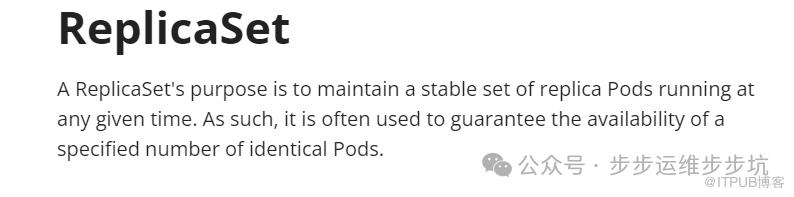
ReplicaSet 的核心目标是确保一组数量固定的、完全相同的 Pod 始终保持运行状态,从而提供一个稳定且可靠的 Pod 集合。通过这种方式,ReplicaSet 能够保证在任何时候都有指定数量的 Pod 可用,以满足应用程序的需求。简单来说,ReplicaSet 就是用来保持 Pod 副本数量稳定和一致性的工具。
简单的说,Replicas 就是用来生成指定个数的pod
pkg/controller/replicaset/replica_set.go(此处查找)
package replicasetimport ("context""fmt""reflect""sort""strings""sync""time"apps "k8s.io/api/apps/v1"v1 "k8s.io/api/core/v1"apierrors "k8s.io/apimachinery/pkg/api/errors"metav1 "k8s.io/apimachinery/pkg/apis/meta/v1""k8s.io/apimachinery/pkg/labels""k8s.io/apimachinery/pkg/runtime/schema""k8s.io/apimachinery/pkg/types"utilruntime "k8s.io/apimachinery/pkg/util/runtime""k8s.io/apimachinery/pkg/util/wait"appsinformers "k8s.io/client-go/informers/apps/v1"coreinformers "k8s.io/client-go/informers/core/v1"clientset "k8s.io/client-go/kubernetes""k8s.io/client-go/kubernetes/scheme"v1core "k8s.io/client-go/kubernetes/typed/core/v1"appslisters "k8s.io/client-go/listers/apps/v1"corelisters "k8s.io/client-go/listers/core/v1""k8s.io/client-go/tools/cache""k8s.io/client-go/tools/record""k8s.io/client-go/util/workqueue""k8s.io/component-base/metrics/legacyregistry"podutil "k8s.io/kubernetes/pkg/api/v1/pod""k8s.io/kubernetes/pkg/controller""k8s.io/kubernetes/pkg/controller/replicaset/metrics")const (// Realistic value of the burstReplica field for the replica set manager based off// performance requirements for kubernetes 1.0.BurstReplicas = 500// The number of times we retry updating a ReplicaSet's status.statusUpdateRetries = 1// controllerUIDIndex is the name for the ReplicaSet store's index function,// which is to index by ReplicaSet's controllerUID.controllerUIDIndex = "controllerUID")//这段代码定义了三个常量://1. BurstReplicas:一个整型常量,表示replica set管理器的burstReplica字段的现实值,基于kubernetes 1.0的性能需求。//2. statusUpdateRetries:一个整型常量,表示更新ReplicaSet状态时重试的次数。//3. controllerUIDIndex:一个字符串常量,表示ReplicaSet存储的索引函数的名称,该函数通过ReplicaSet的controllerUID进行索引。// ReplicaSetController is responsible for synchronizing ReplicaSet objects stored// in the system with actual running pods.type ReplicaSetController struct {// GroupVersionKind indicates the controller type.// Different instances of this struct may handle different GVKs.// For example, this struct can be used (with adapters) to handle ReplicationController.schema.GroupVersionKindkubeClient clientset.InterfacepodControl controller.PodControlInterfaceeventBroadcaster record.EventBroadcaster// A ReplicaSet is temporarily suspended after creating/deleting these many replicas.// It resumes normal action after observing the watch events for them.burstReplicas int// To allow injection of syncReplicaSet for testing.syncHandler func(ctx context.Context, rsKey string) error// A TTLCache of pod creates/deletes each rc expects to see.expectations *controller.UIDTrackingControllerExpectations// A store of ReplicaSets, populated by the shared informer passed to NewReplicaSetControllerrsLister appslisters.ReplicaSetLister// rsListerSynced returns true if the pod store has been synced at least once.// Added as a member to the struct to allow injection for testing.rsListerSynced cache.InformerSyncedrsIndexer cache.Indexer// A store of pods, populated by the shared informer passed to NewReplicaSetControllerpodLister corelisters.PodLister// podListerSynced returns true if the pod store has been synced at least once.// Added as a member to the struct to allow injection for testing.podListerSynced cache.InformerSynced// Controllers that need to be syncedqueue workqueue.RateLimitingInterface}//该函数定义了一个名为ReplicaSetController的结构体,用于同步系统中存储的ReplicaSet对象和实际运行的Pods。//该结构体包含了一些字段,如GroupVersionKind表示控制器类型,kubeClient用于与Kubernetes集群进行交互,//podControl用于创建、删除和更新Pods,eventBroadcaster用于记录事件,burstReplicas表示在创建或删除一定数量的副本后,//ReplicaSet将暂时暂停,syncHandler是一个函数,用于同步ReplicaSet,expectations用于跟踪Pod的创建和删除期望,//rsLister和podLister用于列出ReplicaSet和Pod,rsListerSynced和podListerSynced用于检查存储是否已同步,queue用于存储需要同步的控制器。// NewReplicaSetController configures a replica set controller with the specified event recorderfunc NewReplicaSetController(ctx context.Context, rsInformer appsinformers.ReplicaSetInformer, podInformer coreinformers.PodInformer, kubeClient clientset.Interface, burstReplicas int) *ReplicaSetController {logger := klog.FromContext(ctx)eventBroadcaster := record.NewBroadcaster(record.WithContext(ctx))if err := metrics.Register(legacyregistry.Register); err != nil {logger.Error(err, "unable to register metrics")}return NewBaseController(logger, rsInformer, podInformer, kubeClient, burstReplicas,apps.SchemeGroupVersion.WithKind("ReplicaSet"),"replicaset_controller","replicaset",controller.RealPodControl{KubeClient: kubeClient,Recorder: eventBroadcaster.NewRecorder(scheme.Scheme, v1.EventSource{Component: "replicaset-controller"}),},eventBroadcaster,)}//该函数用于创建并配置一个ReplicaSet控制器,它接收多个参数,包括上下文、ReplicaSet信息、Pod信息、Kubernetes客户端、突发副本数等。//函数内部主要进行了以下操作://1. 从上下文中获取日志记录器。//2. 创建事件广播器,并在上下文中注册。//3. 尝试注册指标,如果失败则记录错误日志。//4. 调用NewBaseController函数创建ReplicaSet控制器实例,传入相关参数,包括日志记录器、ReplicaSet信息、Pod信息、Kubernetes客户端、突发副本数、资源类型、控制器名称、资源缩写、Pod控制对象、事件广播器等。//5. 返回创建的ReplicaSet控制器实例。//该函数主要是为了初始化和配置ReplicaSet控制器,使其能够管理ReplicaSet对象,并处理相关的事件和操作。// NewBaseController is the implementation of NewReplicaSetController with additional injected// parameters so that it can also serve as the implementation of NewReplicationController.func NewBaseController(logger klog.Logger, rsInformer appsinformers.ReplicaSetInformer, podInformer coreinformers.PodInformer, kubeClient clientset.Interface, burstReplicas int,gvk schema.GroupVersionKind, metricOwnerName, queueName string, podControl controller.PodControlInterface, eventBroadcaster record.EventBroadcaster) *ReplicaSetController {rsc := &ReplicaSetController{GroupVersionKind: gvk,kubeClient: kubeClient,podControl: podControl,eventBroadcaster: eventBroadcaster,burstReplicas: burstReplicas,expectations: controller.NewUIDTrackingControllerExpectations(controller.NewControllerExpectations()),queue: workqueue.NewNamedRateLimitingQueue(workqueue.DefaultControllerRateLimiter(), queueName),}rsInformer.Informer().AddEventHandler(cache.ResourceEventHandlerFuncs{AddFunc: func(obj interface{}) {rsc.addRS(logger, obj)},UpdateFunc: func(oldObj, newObj interface{}) {rsc.updateRS(logger, oldObj, newObj)},DeleteFunc: func(obj interface{}) {rsc.deleteRS(logger, obj)},})rsInformer.Informer().AddIndexers(cache.Indexers{controllerUIDIndex: func(obj interface{}) ([]string, error) {rs, ok := obj.(*apps.ReplicaSet)if !ok {return []string{}, nil}controllerRef := metav1.GetControllerOf(rs)if controllerRef == nil {return []string{}, nil}return []string{string(controllerRef.UID)}, nil},})rsc.rsIndexer = rsInformer.Informer().GetIndexer()rsc.rsLister = rsInformer.Lister()rsc.rsListerSynced = rsInformer.Informer().HasSyncedpodInformer.Informer().AddEventHandler(cache.ResourceEventHandlerFuncs{AddFunc: func(obj interface{}) {rsc.addPod(logger, obj)},// This invokes the ReplicaSet for every pod change, eg: host assignment. Though this might seem like// overkill the most frequent pod update is status, and the associated ReplicaSet will only list from// local storage, so it should be ok.UpdateFunc: func(oldObj, newObj interface{}) {rsc.updatePod(logger, oldObj, newObj)},DeleteFunc: func(obj interface{}) {rsc.deletePod(logger, obj)},})rsc.podLister = podInformer.Lister()rsc.podListerSynced = podInformer.Informer().HasSyncedrsc.syncHandler = rsc.syncReplicaSetreturn rsc}//该函数创建了一个ReplicaSetController对象,并通过注入的参数初始化了其属性。//它还为ReplicaSet和Pod的informers设置了事件处理函数,并返回创建的ReplicaSetController对象。//- 接收多个参数,包括日志记录器、ReplicaSet和Pod的informers、Kubernetes客户端、突发副本数量、资源版本、指标所有者名称、队列名称和Pod控制接口。//- 创建一个ReplicaSetController对象,并设置其属性,包括资源版本、Kubernetes客户端、Pod控制接口、事件广播器、突发副本数量、期望和队列。//- 为ReplicaSet的informer添加事件处理函数,包括添加、更新和删除操作。//- 为Pod的informer添加事件处理函数,包括添加、更新和删除操作。//- 返回创建的ReplicaSetController对象。//该函数主要是为了创建一个ReplicaSetController对象,并通过注入的参数初始化其属性,同时为相关的informers设置事件处理函数,以便能够正确地管理和同步ReplicaSet和Pod。// Run begins watching and syncing.func (rsc *ReplicaSetController) Run(ctx context.Context, workers int) {defer utilruntime.HandleCrash()// Start events processing pipeline.rsc.eventBroadcaster.StartStructuredLogging(3)rsc.eventBroadcaster.StartRecordingToSink(&v1core.EventSinkImpl{Interface: rsc.kubeClient.CoreV1().Events("")})defer rsc.eventBroadcaster.Shutdown()defer rsc.queue.ShutDown()controllerName := strings.ToLower(rsc.Kind)logger := klog.FromContext(ctx)logger.Info("Starting controller", "name", controllerName)defer logger.Info("Shutting down controller", "name", controllerName)if !cache.WaitForNamedCacheSync(rsc.Kind, ctx.Done(), rsc.podListerSynced, rsc.rsListerSynced) {return}for i := 0; i < workers; i++ {go wait.UntilWithContext(ctx, rsc.worker, time.Second)}<-ctx.Done()}//该函数是ReplicaSetController类型的Run方法,用于启动副本集控制器的监控和同步。//它首先启动事件处理管道,然后创建指定数量的工作协程,并等待控制器的缓存同步完成。//之后,无限循环地等待上下文取消或超时,直到被取消或中断。//当接收到上下文取消信号时,会优雅地关闭事件处理管道和队列,并记录日志信息。// getReplicaSetsWithSameController returns a list of ReplicaSets with the same// owner as the given ReplicaSet.func (rsc *ReplicaSetController) getReplicaSetsWithSameController(logger klog.Logger, rs *apps.ReplicaSet) []*apps.ReplicaSet {controllerRef := metav1.GetControllerOf(rs)if controllerRef == nil {utilruntime.HandleError(fmt.Errorf("ReplicaSet has no controller: %v", rs))return nil}objects, err := rsc.rsIndexer.ByIndex(controllerUIDIndex, string(controllerRef.UID))if err != nil {utilruntime.HandleError(err)return nil}relatedRSs := make([]*apps.ReplicaSet, 0, len(objects))for _, obj := range objects {relatedRSs = append(relatedRSs, obj.(*apps.ReplicaSet))}if klogV := logger.V(2); klogV.Enabled() {klogV.Info("Found related ReplicaSets", "replicaSet", klog.KObj(rs), "relatedReplicaSets", klog.KObjSlice(relatedRSs))}return relatedRSs}//该函数用于返回与给定ReplicaSet具有相同控制器的所有ReplicaSet列表。//它首先通过检查给定ReplicaSet的控制器引用来确定其控制器。//然后,它使用控制器的UID作为索引从rsIndexer中检索所有相关对象,并将它们转换为ReplicaSet类型的切片。//最后,如果日志级别足够高,则记录相关信息,并返回相关ReplicaSet的切片。// getPodReplicaSets returns a list of ReplicaSets matching the given pod.func (rsc *ReplicaSetController) getPodReplicaSets(pod *v1.Pod) []*apps.ReplicaSet {rss, err := rsc.rsLister.GetPodReplicaSets(pod)if err != nil {return nil}if len(rss) > 1 {// ControllerRef will ensure we don't do anything crazy, but more than one// item in this list nevertheless constitutes user error.utilruntime.HandleError(fmt.Errorf("user error! more than one %v is selecting pods with labels: %+v", rsc.Kind, pod.Labels))}return rss}//该函数用于获取与给定Pod相匹配的ReplicaSets列表。//它通过调用rsLister的GetPodReplicaSets方法来获取匹配的ReplicaSets,如果获取出错则返回nil。//如果获取到的ReplicaSets数量大于1,则会记录一条错误日志,并返回所有获取到的ReplicaSets。// resolveControllerRef returns the controller referenced by a ControllerRef,// or nil if the ControllerRef could not be resolved to a matching controller// of the correct Kind.func (rsc *ReplicaSetController) resolveControllerRef(namespace string, controllerRef *metav1.OwnerReference) *apps.ReplicaSet {// We can't look up by UID, so look up by Name and then verify UID.// Don't even try to look up by Name if it's the wrong Kind.if controllerRef.Kind != rsc.Kind {return nil}rs, err := rsc.rsLister.ReplicaSets(namespace).Get(controllerRef.Name)if err != nil {return nil}if rs.UID != controllerRef.UID {// The controller we found with this Name is not the same one that the// ControllerRef points to.return nil}return rs}//该函数是一个Go语言函数,用于解析一个ControllerRef引用所指向的控制器,如果无法解析或解析结果不符合预期,则返回nil。//函数接受三个参数://- namespace:字符串类型,表示命名空间。//- controllerRef:指向metav1.OwnerReference类型的指针,表示一个控制器引用。//函数返回一个指向apps.ReplicaSet类型的指针,表示解析得到的控制器。//函数的主要逻辑如下://1. 首先,检查controllerRef的Kind是否与rsc.Kind相等,如果不相等,则直接返回nil。//2. 然后,通过调用rsc.rsLister.ReplicaSets(namespace).Get(controllerRef.Name)来获取具有指定名称的ReplicaSet对象,其中namespace参数为所处的命名空间。//3. 如果获取过程中出现错误,则直接返回nil。//4. 最后,检查获取到的ReplicaSet对象的UID是否与controllerRef的UID相等,如果不相等,则返回nil,表示解析失败;//如果相等,则返回该ReplicaSet对象,表示解析成功。func (rsc *ReplicaSetController) enqueueRS(rs *apps.ReplicaSet) {key, err := controller.KeyFunc(rs)if err != nil {utilruntime.HandleError(fmt.Errorf("couldn't get key for object %#v: %v", rs, err))return}rsc.queue.Add(key)}//该函数用于将指定的ReplicaSet对象放入队列中,以便后续处理。//它首先通过调用controller.KeyFunc方法获取ReplicaSet的键值,如果获取失败,则通过utilruntime.HandleError方法记录错误信息并返回。//如果获取成功,则将键值添加到rsc.queue队列中。func (rsc *ReplicaSetController) enqueueRSAfter(rs *apps.ReplicaSet, duration time.Duration) {key, err := controller.KeyFunc(rs)if err != nil {utilruntime.HandleError(fmt.Errorf("couldn't get key for object %#v: %v", rs, err))return}rsc.queue.AddAfter(key, duration)}//该函数用于将指定的ReplicaSet对象加入到队列中,并设定延迟时间为duration。//首先通过controller.KeyFunc(rs)获取ReplicaSet的键值,如果获取失败则通过utilruntime.HandleError处理错误并返回。//如果获取成功,则将键值和延迟时间添加到rsc.queue队列中。func (rsc *ReplicaSetController) addRS(logger klog.Logger, obj interface{}) {rs := obj.(*apps.ReplicaSet)logger.V(4).Info("Adding", "replicaSet", klog.KObj(rs))rsc.enqueueRS(rs)}//该函数是一个Go语言的方法,名为addRS,它属于ReplicaSetController类型。//该方法接受两个参数:logger是一个klog.Logger类型,用于记录日志信息;obj是一个空接口类型,表示可以传入任何类型的对象。//函数体内部将obj断言为*apps.ReplicaSet类型,并将其赋值给变量rs。//接着,通过logger记录一条日志信息,日志级别为4,内容为"Adding replicaSet",并附带rs对象的相关信息。//最后,调用rsc.enqueueRS(rs)方法,将rs对象放入队列中进行后续处理。// callback when RS is updatedfunc (rsc *ReplicaSetController) updateRS(logger klog.Logger, old, cur interface{}) {oldRS := old.(*apps.ReplicaSet)curRS := cur.(*apps.ReplicaSet)// TODO: make a KEP and fix informers to always call the delete event handler on re-createif curRS.UID != oldRS.UID {key, err := controller.KeyFunc(oldRS)if err != nil {utilruntime.HandleError(fmt.Errorf("couldn't get key for object %#v: %v", oldRS, err))return}rsc.deleteRS(logger, cache.DeletedFinalStateUnknown{Key: key,Obj: oldRS,})}// You might imagine that we only really need to enqueue the// replica set when Spec changes, but it is safer to sync any// time this function is triggered. That way a full informer// resync can requeue any replica set that don't yet have pods// but whose last attempts at creating a pod have failed (since// we don't block on creation of pods) instead of those// replica sets stalling indefinitely. Enqueueing every time// does result in some spurious syncs (like when Status.Replica// is updated and the watch notification from it retriggers// this function), but in general extra resyncs shouldn't be// that bad as ReplicaSets that haven't met expectations yet won't// sync, and all the listing is done using local stores.if *(oldRS.Spec.Replicas) != *(curRS.Spec.Replicas) {logger.V(4).Info("replicaSet updated. Desired pod count change.", "replicaSet", klog.KObj(oldRS), "oldReplicas", *(oldRS.Spec.Replicas), "newReplicas", *(curRS.Spec.Replicas))}rsc.enqueueRS(curRS)}//该函数是ReplicaSetController的一个方法,用于处理ReplicaSet(RS)更新的回调。//主要功能包括://1. 类型断言:将old和cur接口转换为*apps.ReplicaSet类型的oldRS和curRS。//2. 检查UID是否变化:如果curRS的UID与oldRS的UID不相同,则将oldRS作为被删除的对象处理。//通过调用deleteRS方法,传入cache.DeletedFinalStateUnknown结构体,其中包含oldRS的关键字key和对象本身。//3. 触发重新排队:如果oldRS和curRS的副本数量(Spec.Replicas)不相等,则记录日志并调用enqueueRS方法,将curRS加入队列以进行后续处理。//该函数的主要目的是在RS更新时进行相应处理,包括处理RS的删除和重新排队,以确保RS的状态能够及时更新和同步。func (rsc *ReplicaSetController) deleteRS(logger klog.Logger, obj interface{}) {rs, ok := obj.(*apps.ReplicaSet)if !ok {tombstone, ok := obj.(cache.DeletedFinalStateUnknown)if !ok {utilruntime.HandleError(fmt.Errorf("couldn't get object from tombstone %#v", obj))return}rs, ok = tombstone.Obj.(*apps.ReplicaSet)if !ok {utilruntime.HandleError(fmt.Errorf("tombstone contained object that is not a ReplicaSet %#v", obj))return}}key, err := controller.KeyFunc(rs)if err != nil {utilruntime.HandleError(fmt.Errorf("couldn't get key for object %#v: %v", rs, err))return}logger.V(4).Info("Deleting", "replicaSet", klog.KObj(rs))// Delete expectations for the ReplicaSet so if we create a new one with the same name it starts cleanrsc.expectations.DeleteExpectations(logger, key)rsc.queue.Add(key)}//该函数是一个Go语言函数,它定义了一个名为deleteRS的方法,该方法属于ReplicaSetController类型。//该方法的主要功能是从Kubernetes集群中删除一个ReplicaSet对象,并记录相关日志。//具体来说,该方法首先尝试将传入的obj参数转换为*apps.ReplicaSet类型,如果转换失败,则尝试将obj参数转换为cache.DeletedFinalStateUnknown类型。//如果转换成功,则从DeletedFinalStateUnknown对象中获取原始的ReplicaSet对象。//如果转换失败,则记录错误日志并返回。//接下来,该方法通过调用controller.KeyFunc函数获取ReplicaSet对象的键值(key),如果获取失败,则记录错误日志并返回。//然后,该方法使用logger对象记录一条删除ReplicaSet的日志信息。//最后,该方法删除ReplicaSet对象的期望状态,并将该对象的键值添加到rsc队列中,以便后续处理。//总结来说,该方法的主要作用是处理ReplicaSet对象的删除操作,并进行相关的日志记录和状态管理。// When a pod is created, enqueue the replica set that manages it and update its expectations.func (rsc *ReplicaSetController) addPod(logger klog.Logger, obj interface{}) {pod := obj.(*v1.Pod)if pod.DeletionTimestamp != nil {// on a restart of the controller manager, it's possible a new pod shows up in a state that// is already pending deletion. Prevent the pod from being a creation observation.rsc.deletePod(logger, pod)return}// If it has a ControllerRef, that's all that matters.if controllerRef := metav1.GetControllerOf(pod); controllerRef != nil {rs := rsc.resolveControllerRef(pod.Namespace, controllerRef)if rs == nil {return}rsKey, err := controller.KeyFunc(rs)if err != nil {return}logger.V(4).Info("Pod created", "pod", klog.KObj(pod), "detail", pod)rsc.expectations.CreationObserved(logger, rsKey)rsc.queue.Add(rsKey)return}// Otherwise, it's an orphan. Get a list of all matching ReplicaSets and sync// them to see if anyone wants to adopt it.// DO NOT observe creation because no controller should be waiting for an// orphan.rss := rsc.getPodReplicaSets(pod)if len(rss) == 0 {return}logger.V(4).Info("Orphan Pod created", "pod", klog.KObj(pod), "detail", pod)for _, rs := range rss {rsc.enqueueRS(rs)}}//该函数是ReplicaSetController的一个方法,用于处理Pod创建事件。//它首先检查Pod是否已被标记为删除,如果是,则调用deletePod方法进行处理并返回。//接着,它检查Pod是否有ControllerRef,如果有,则解析ControllerRef并获取对应的ReplicaSet。//如果解析失败或ReplicaSet不存在,则返回。然后,该函数记录Pod的创建事件,并将对应的ReplicaSet加入到队列中以进行后续处理。//如果Pod没有ControllerRef,则将其视为孤儿Pod,并尝试找到匹配的ReplicaSet进行收养。如果没有找到匹配的ReplicaSet,则返回。//最后,该函数记录孤儿Pod的创建事件,并将所有匹配的ReplicaSet加入到队列中以进行后续处理。// When a pod is updated, figure out what replica set/s manage it and wake them// up. If the labels of the pod have changed we need to awaken both the old// and new replica set. old and cur must be *v1.Pod types.func (rsc *ReplicaSetController) updatePod(logger klog.Logger, old, cur interface{}) {curPod := cur.(*v1.Pod)oldPod := old.(*v1.Pod)if curPod.ResourceVersion == oldPod.ResourceVersion {// Periodic resync will send update events for all known pods.// Two different versions of the same pod will always have different RVs.return}labelChanged := !reflect.DeepEqual(curPod.Labels, oldPod.Labels)if curPod.DeletionTimestamp != nil {// when a pod is deleted gracefully it's deletion timestamp is first modified to reflect a grace period,// and after such time has passed, the kubelet actually deletes it from the store. We receive an update// for modification of the deletion timestamp and expect an rs to create more replicas asap, not wait// until the kubelet actually deletes the pod. This is different from the Phase of a pod changing, because// an rs never initiates a phase change, and so is never asleep waiting for the same.rsc.deletePod(logger, curPod)if labelChanged {// we don't need to check the oldPod.DeletionTimestamp because DeletionTimestamp cannot be unset.rsc.deletePod(logger, oldPod)}return}curControllerRef := metav1.GetControllerOf(curPod)oldControllerRef := metav1.GetControllerOf(oldPod)controllerRefChanged := !reflect.DeepEqual(curControllerRef, oldControllerRef)if controllerRefChanged && oldControllerRef != nil {// The ControllerRef was changed. Sync the old controller, if any.if rs := rsc.resolveControllerRef(oldPod.Namespace, oldControllerRef); rs != nil {rsc.enqueueRS(rs)}}// If it has a ControllerRef, that's all that matters.if curControllerRef != nil {rs := rsc.resolveControllerRef(curPod.Namespace, curControllerRef)if rs == nil {return}logger.V(4).Info("Pod objectMeta updated.", "pod", klog.KObj(oldPod), "oldObjectMeta", oldPod.ObjectMeta, "curObjectMeta", curPod.ObjectMeta)rsc.enqueueRS(rs)// TODO: MinReadySeconds in the Pod will generate an Available condition to be added in// the Pod status which in turn will trigger a requeue of the owning replica set thus// having its status updated with the newly available replica. For now, we can fake the// update by resyncing the controller MinReadySeconds after the it is requeued because// a Pod transitioned to Ready.// Note that this still suffers from #29229, we are just moving the problem one level// "closer" to kubelet (from the deployment to the replica set controller).if !podutil.IsPodReady(oldPod) && podutil.IsPodReady(curPod) && rs.Spec.MinReadySeconds > 0 {logger.V(2).Info("pod will be enqueued after a while for availability check", "duration", rs.Spec.MinReadySeconds, "kind", rsc.Kind, "pod", klog.KObj(oldPod))// Add a second to avoid milliseconds skew in AddAfter.// See https://github.com/kubernetes/kubernetes/issues/39785#issuecomment-279959133 for more info.rsc.enqueueRSAfter(rs, (time.Duration(rs.Spec.MinReadySeconds)*time.Second)+time.Second)}return}// Otherwise, it's an orphan. If anything changed, sync matching controllers// to see if anyone wants to adopt it now.if labelChanged || controllerRefChanged {rss := rsc.getPodReplicaSets(curPod)if len(rss) == 0 {return}logger.V(4).Info("Orphan Pod objectMeta updated.", "pod", klog.KObj(oldPod), "oldObjectMeta", oldPod.ObjectMeta, "curObjectMeta", curPod.ObjectMeta)for _, rs := range rss {rsc.enqueueRS(rs)}}}//该函数是一个Go语言函数,名为updatePod,属于ReplicaSetController类型。//该函数在Pod更新时,确定哪些副本集管理该Pod,并唤醒它们。//如果Pod的标签发生变化,需要唤醒旧的和新的副本集。函数参数包括logger、old和cur,其中logger是日志记录器,old和cur是待比较的Pod对象。//函数主要通过比较新旧Pod的资源版本、标签和控制器引用,来确定是否需要进行相应操作,如删除Pod、更新控制器引用、唤醒副本集等。// When a pod is deleted, enqueue the replica set that manages the pod and update its expectations.// obj could be an *v1.Pod, or a DeletionFinalStateUnknown marker item.func (rsc *ReplicaSetController) deletePod(logger klog.Logger, obj interface{}) {pod, ok := obj.(*v1.Pod)// When a delete is dropped, the relist will notice a pod in the store not// in the list, leading to the insertion of a tombstone object which contains// the deleted key/value. Note that this value might be stale. If the pod// changed labels the new ReplicaSet will not be woken up till the periodic resync.if !ok {tombstone, ok := obj.(cache.DeletedFinalStateUnknown)if !ok {utilruntime.HandleError(fmt.Errorf("couldn't get object from tombstone %+v", obj))return}pod, ok = tombstone.Obj.(*v1.Pod)if !ok {utilruntime.HandleError(fmt.Errorf("tombstone contained object that is not a pod %#v", obj))return}}controllerRef := metav1.GetControllerOf(pod)if controllerRef == nil {// No controller should care about orphans being deleted.return}rs := rsc.resolveControllerRef(pod.Namespace, controllerRef)if rs == nil {return}rsKey, err := controller.KeyFunc(rs)if err != nil {utilruntime.HandleError(fmt.Errorf("couldn't get key for object %#v: %v", rs, err))return}logger.V(4).Info("Pod deleted", "delete_by", utilruntime.GetCaller(), "deletion_timestamp", pod.DeletionTimestamp, "pod", klog.KObj(pod))rsc.expectations.DeletionObserved(logger, rsKey, controller.PodKey(pod))rsc.queue.Add(rsKey)}//该函数是 ReplicaSetController 的一个方法,用于处理 Pod 被删除的情况。//它会将管理该 Pod 的 ReplicaSet 加入队列,并更新其期望值。如果删除成功,则会将 ReplicaSet 的键加入期望值中,并将其加入队列中进行后续处理。//如果删除操作被丢弃,则会在存储中注意到不在列表中的 Pod,从而插入一个包含删除键/值的墓碑对象。//如果墓碑对象不是 Pod,则会记录错误并返回。//如果 Pod 没有控制器引用,则直接返回。如果控制器引用解析失败,则返回。//如果获取 ReplicaSet 的键失败,则记录错误并返回。最后,记录日志并更新期望值和队列。// worker runs a worker thread that just dequeues items, processes them, and marks them done.// It enforces that the syncHandler is never invoked concurrently with the same key.func (rsc *ReplicaSetController) worker(ctx context.Context) {for rsc.processNextWorkItem(ctx) {}}//该函数是一个工作线程,它不断从队列中取出项目,进行处理,并标记为完成。//它确保相同的键永远不会并发调用syncHandler。//函数通过调用processNextWorkItem循环执行任务,直到无法继续执行为止。func (rsc *ReplicaSetController) processNextWorkItem(ctx context.Context) bool {key, quit := rsc.queue.Get()if quit {return false}defer rsc.queue.Done(key)err := rsc.syncHandler(ctx, key.(string))if err == nil {rsc.queue.Forget(key)return true}utilruntime.HandleError(fmt.Errorf("sync %q failed with %v", key, err))rsc.queue.AddRateLimited(key)return true}// manageReplicas checks and updates replicas for the given ReplicaSet.// Does NOT modify <filteredPods>.// It will requeue the replica set in case of an error while creating/deleting pods.func (rsc *ReplicaSetController) manageReplicas(ctx context.Context, filteredPods []*v1.Pod, rs *apps.ReplicaSet) error {diff := len(filteredPods) - int(*(rs.Spec.Replicas))rsKey, err := controller.KeyFunc(rs)if err != nil {utilruntime.HandleError(fmt.Errorf("couldn't get key for %v %#v: %v", rsc.Kind, rs, err))return nil}logger := klog.FromContext(ctx)if diff < 0 {diff *= -1if diff > rsc.burstReplicas {diff = rsc.burstReplicas}// TODO: Track UIDs of creates just like deletes. The problem currently// is we'd need to wait on the result of a create to record the pod's// UID, which would require locking *across* the create, which will turn// into a performance bottleneck. We should generate a UID for the pod// beforehand and store it via ExpectCreations.rsc.expectations.ExpectCreations(logger, rsKey, diff)logger.V(2).Info("Too few replicas", "replicaSet", klog.KObj(rs), "need", *(rs.Spec.Replicas), "creating", diff)// Batch the pod creates. Batch sizes start at SlowStartInitialBatchSize// and double with each successful iteration in a kind of "slow start".// This handles attempts to start large numbers of pods that would// likely all fail with the same error. For example a project with a// low quota that attempts to create a large number of pods will be// prevented from spamming the API service with the pod create requests// after one of its pods fails. Conveniently, this also prevents the// event spam that those failures would generate.successfulCreations, err := slowStartBatch(diff, controller.SlowStartInitialBatchSize, func() error {err := rsc.podControl.CreatePods(ctx, rs.Namespace, &rs.Spec.Template, rs, metav1.NewControllerRef(rs, rsc.GroupVersionKind))if err != nil {if apierrors.HasStatusCause(err, v1.NamespaceTerminatingCause) {// if the namespace is being terminated, we don't have to do// anything because any creation will failreturn nil}}return err})// Any skipped pods that we never attempted to start shouldn't be expected.// The skipped pods will be retried later. The next controller resync will// retry the slow start process.if skippedPods := diff - successfulCreations; skippedPods > 0 {logger.V(2).Info("Slow-start failure. Skipping creation of pods, decrementing expectations", "podsSkipped", skippedPods, "kind", rsc.Kind, "replicaSet", klog.KObj(rs))for i := 0; i < skippedPods; i++ {// Decrement the expected number of creates because the informer won't observe this podrsc.expectations.CreationObserved(logger, rsKey)}}return err} else if diff > 0 {if diff > rsc.burstReplicas {diff = rsc.burstReplicas}logger.V(2).Info("Too many replicas", "replicaSet", klog.KObj(rs), "need", *(rs.Spec.Replicas), "deleting", diff)relatedPods, err := rsc.getIndirectlyRelatedPods(logger, rs)utilruntime.HandleError(err)// Choose which Pods to delete, preferring those in earlier phases of startup.podsToDelete := getPodsToDelete(filteredPods, relatedPods, diff)// Snapshot the UIDs (ns/name) of the pods we're expecting to see// deleted, so we know to record their expectations exactly once either// when we see it as an update of the deletion timestamp, or as a delete.// Note that if the labels on a pod/rs change in a way that the pod gets// orphaned, the rs will only wake up after the expectations have// expired even if other pods are deleted.rsc.expectations.ExpectDeletions(logger, rsKey, getPodKeys(podsToDelete))errCh := make(chan error, diff)var wg sync.WaitGroupwg.Add(diff)for _, pod := range podsToDelete {go func(targetPod *v1.Pod) {defer wg.Done()if err := rsc.podControl.DeletePod(ctx, rs.Namespace, targetPod.Name, rs); err != nil {// Decrement the expected number of deletes because the informer won't observe this deletionpodKey := controller.PodKey(targetPod)rsc.expectations.DeletionObserved(logger, rsKey, podKey)if !apierrors.IsNotFound(err) {logger.V(2).Info("Failed to delete pod, decremented expectations", "pod", podKey, "kind", rsc.Kind, "replicaSet", klog.KObj(rs))errCh <- err}}}(pod)}wg.Wait()select {case err := <-errCh:// all errors have been reported before and they're likely to be the same, so we'll only return the first one we hit.if err != nil {return err}default:}}return nil}//该函数是用于检查和更新给定 ReplicaSet 的副本数量的。//它首先计算过滤后的 Pod 数量与 ReplicaSet 规定的副本数量之间的差值,然后根据差值进行相应的操作。//如果差值小于 0,表示副本数量不足,它将通过调用 expectations.ExpectCreations 方法来期望创建相应数量的 Pod,并使用 slowStartBatch 方法批量创建 Pod。//如果创建过程中出现错误,会通过调用 expectations.CreationObserved 方法来减少期望的创建数量。//如果差值大于 0,表示副本数量过多,它将通过调用 expectations.ExpectDeletions 方法来期望删除相应数量的 Pod,并使用 getPodsToDelete 方法选择要删除的 Pod。//删除 Pod 的操作是并发进行的,通过调用 podControl.DeletePod 方法来删除 Pod,并通过调用 expectations.DeletionObserved 方法来减少期望的删除数量。// syncReplicaSet will sync the ReplicaSet with the given key if it has had its expectations fulfilled,// meaning it did not expect to see any more of its pods created or deleted. This function is not meant to be// invoked concurrently with the same key.func (rsc *ReplicaSetController) syncReplicaSet(ctx context.Context, key string) error {logger := klog.FromContext(ctx)startTime := time.Now()defer func() {logger.Info("Finished syncing", "kind", rsc.Kind, "key", key, "duration", time.Since(startTime))}()namespace, name, err := cache.SplitMetaNamespaceKey(key)if err != nil {return err}rs, err := rsc.rsLister.ReplicaSets(namespace).Get(name)if apierrors.IsNotFound(err) {logger.V(4).Info("deleted", "kind", rsc.Kind, "key", key)rsc.expectations.DeleteExpectations(logger, key)return nil}if err != nil {return err}rsNeedsSync := rsc.expectations.SatisfiedExpectations(logger, key)selector, err := metav1.LabelSelectorAsSelector(rs.Spec.Selector)if err != nil {utilruntime.HandleError(fmt.Errorf("error converting pod selector to selector for rs %v/%v: %v", namespace, name, err))return nil}// list all pods to include the pods that don't match the rs`s selector// anymore but has the stale controller ref.// TODO: Do the List and Filter in a single pass, or use an index.allPods, err := rsc.podLister.Pods(rs.Namespace).List(labels.Everything())if err != nil {return err}// Ignore inactive pods.filteredPods := controller.FilterActivePods(logger, allPods)// NOTE: filteredPods are pointing to objects from cache - if you need to// modify them, you need to copy it first.filteredPods, err = rsc.claimPods(ctx, rs, selector, filteredPods)if err != nil {return err}var manageReplicasErr errorif rsNeedsSync && rs.DeletionTimestamp == nil {manageReplicasErr = rsc.manageReplicas(ctx, filteredPods, rs)}rs = rs.DeepCopy()newStatus := calculateStatus(rs, filteredPods, manageReplicasErr)// Always updates status as pods come up or die.updatedRS, err := updateReplicaSetStatus(logger, rsc.kubeClient.AppsV1().ReplicaSets(rs.Namespace), rs, newStatus)if err != nil {// Multiple things could lead to this update failing. Requeuing the replica set ensures// Returning an error causes a requeue without forcing a hotloopreturn err}// Resync the ReplicaSet after MinReadySeconds as a last line of defense to guard against clock-skew.if manageReplicasErr == nil && updatedRS.Spec.MinReadySeconds > 0 &&updatedRS.Status.ReadyReplicas == *(updatedRS.Spec.Replicas) &&updatedRS.Status.AvailableReplicas != *(updatedRS.Spec.Replicas) {rsc.queue.AddAfter(key, time.Duration(updatedRS.Spec.MinReadySeconds)*time.Second)}return manageReplicasErr}//该函数是一个用于同步ReplicaSet的状态的函数。//它首先通过给定的键获取ReplicaSet,并检查其期望是否已满足。//如果已满足,它将进行一系列操作来更新ReplicaSet的状态,//包括列出所有Pods、筛选出活动的Pods、确定Pods是否应该属于该ReplicaSet、管理ReplicaSet的副本数量,并最后更新ReplicaSet的状态。//如果在更新状态时出现错误,该函数将返回该错误,以便进行重新尝试。func (rsc *ReplicaSetController) claimPods(ctx context.Context, rs *apps.ReplicaSet, selector labels.Selector, filteredPods []*v1.Pod) ([]*v1.Pod, error) {// If any adoptions are attempted, we should first recheck for deletion with// an uncached quorum read sometime after listing Pods (see #42639).canAdoptFunc := controller.RecheckDeletionTimestamp(func(ctx context.Context) (metav1.Object, error) {fresh, err := rsc.kubeClient.AppsV1().ReplicaSets(rs.Namespace).Get(ctx, rs.Name, metav1.GetOptions{})if err != nil {return nil, err}if fresh.UID != rs.UID {return nil, fmt.Errorf("original %v %v/%v is gone: got uid %v, wanted %v", rsc.Kind, rs.Namespace, rs.Name, fresh.UID, rs.UID)}return fresh, nil})cm := controller.NewPodControllerRefManager(rsc.podControl, rs, selector, rsc.GroupVersionKind, canAdoptFunc)return cm.ClaimPods(ctx, filteredPods)}//该函数是用于将Pod声明为属于ReplicaSet的。//它首先通过给定的标签选择器从filteredPods中选择Pod,然后使用PodControllerRefManager来管理这些Pod与ReplicaSet之间的关系。//如果成功,这些Pod将被标记为属于该ReplicaSet。//函数返回被成功声明的Pod列表以及可能出现的错误。// slowStartBatch tries to call the provided function a total of 'count' times,// starting slow to check for errors, then speeding up if calls succeed.//// It groups the calls into batches, starting with a group of initialBatchSize.// Within each batch, it may call the function multiple times concurrently.//// If a whole batch succeeds, the next batch may get exponentially larger.// If there are any failures in a batch, all remaining batches are skipped// after waiting for the current batch to complete.//// It returns the number of successful calls to the function.func slowStartBatch(count int, initialBatchSize int, fn func() error) (int, error) {remaining := countsuccesses := 0for batchSize := min(remaining, initialBatchSize); batchSize > 0; batchSize = min(2*batchSize, remaining) {errCh := make(chan error, batchSize)var wg sync.WaitGroupwg.Add(batchSize)for i := 0; i < batchSize; i++ {go func() {defer wg.Done()if err := fn(); err != nil {errCh <- err}}()}wg.Wait()curSuccesses := batchSize - len(errCh)successes += curSuccessesif len(errCh) > 0 {return successes, <-errCh}remaining -= batchSize}return successes, nil}//该函数slowStartBatch尝试总计调用提供的函数count次,开始时速度较慢以检查错误,如果调用成功则加速。//它将调用分组为批次,从初始批次大小开始。//在每个批次内,它可以并发调用函数多次。//如果整个批次成功,则下一批次可能会指数级增长。//如果批次中存在任何失败,则在等待当前批次完成后跳过所有剩余批次。//该函数返回成功调用函数的次数。//函数详细说明://- 参数count指定要调用函数的总次数。//- 参数initialBatchSize指定开始的批次大小。//- 参数fn是需要调用的函数,其返回类型为error。//- 函数内部使用remaining变量来记录剩余的调用次数,successes变量来记录成功的调用次数。//- 使用for循环来执行批次调用,批次大小从initialBatchSize开始,每轮迭代后根据成功调用次数和剩余次数进行调整。//- 在每个批次中,使用goroutine并发调用函数fn,并将错误通过errCh通道返回。//- 使用sync.WaitGroup等待每个批次的所有goroutine完成。//- 计算每个批次的成功调用次数,并累加到successes中。//- 如果存在错误,返回当前的成功调用次数和第一个错误。//- 循环结束后,返回最终的成功调用次数和nil错误。// getIndirectlyRelatedPods returns all pods that are owned by any ReplicaSet// that is owned by the given ReplicaSet's owner.func (rsc *ReplicaSetController) getIndirectlyRelatedPods(logger klog.Logger, rs *apps.ReplicaSet) ([]*v1.Pod, error) {var relatedPods []*v1.Podseen := make(map[types.UID]*apps.ReplicaSet)for _, relatedRS := range rsc.getReplicaSetsWithSameController(logger, rs) {selector, err := metav1.LabelSelectorAsSelector(relatedRS.Spec.Selector)if err != nil {// This object has an invalid selector, it does not match any podscontinue}pods, err := rsc.podLister.Pods(relatedRS.Namespace).List(selector)if err != nil {return nil, err}for _, pod := range pods {if otherRS, found := seen[pod.UID]; found {logger.V(5).Info("Pod is owned by both", "pod", klog.KObj(pod), "kind", rsc.Kind, "replicaSets", klog.KObjSlice([]klog.KMetadata{otherRS, relatedRS}))continue}seen[pod.UID] = relatedRSrelatedPods = append(relatedPods, pod)}}logger.V(4).Info("Found related pods", "kind", rsc.Kind, "replicaSet", klog.KObj(rs), "pods", klog.KObjSlice(relatedPods))return relatedPods, nil}//该函数用于获取与给定ReplicaSet的所有者相关的所有Pod。//具体步骤如下://1. 创建一个空的Pod切片和一个用于存储已处理的ReplicaSet的映射。//2. 遍历与给定ReplicaSet具有相同控制器的所有ReplicaSet。//3. 将ReplicaSet的标签选择器转换为标签选择器对象。//4. 列出与该ReplicaSet选择器匹配的所有Pod。//5. 遍历Pod列表,如果Pod已被处理,则跳过;否则将该Pod添加到结果列表中,并将处理过的ReplicaSet添加到映射中。//6. 返回结果列表。//该函数通过查找和处理与给定ReplicaSet的所有者相关的所有ReplicaSet和Pod,来获取与给定ReplicaSet间接相关的所有Pod。func getPodsToDelete(filteredPods, relatedPods []*v1.Pod, diff int) []*v1.Pod {// No need to sort pods if we are about to delete all of them.// diff will always be <= len(filteredPods), so not need to handle > case.if diff < len(filteredPods) {podsWithRanks := getPodsRankedByRelatedPodsOnSameNode(filteredPods, relatedPods)sort.Sort(podsWithRanks)reportSortingDeletionAgeRatioMetric(filteredPods, diff)}return filteredPods[:diff]}//该函数用于根据给定条件获取要删除的Pod列表。//函数参数包括:filteredPods表示待筛选的Pod列表,relatedPods表示相关的Pod列表,diff表示要删除的Pod数量。//函数首先判断如果diff小于filteredPods的长度,则调用getPodsRankedByRelatedPodsOnSameNode函数根据相关Pod在同一节点上的排名对filteredPods进行排序。//然后调用reportSortingDeletionAgeRatioMetric函数报告排序和删除年龄比例的指标。//最后,函数返回filteredPods列表中的前diff个Pod作为要删除的Pod列表。func reportSortingDeletionAgeRatioMetric(filteredPods []*v1.Pod, diff int) {now := time.Now()youngestTime := time.Time{}// first we need to check all of the ready pods to get the youngest, as they may not necessarily be sorted by timestamp alonefor _, pod := range filteredPods {if pod.CreationTimestamp.Time.After(youngestTime) && podutil.IsPodReady(pod) {youngestTime = pod.CreationTimestamp.Time}}// for each pod chosen for deletion, report the ratio of its age to the youngest pod's agefor _, pod := range filteredPods[:diff] {if !podutil.IsPodReady(pod) {continue}ratio := float64(now.Sub(pod.CreationTimestamp.Time).Milliseconds() / now.Sub(youngestTime).Milliseconds())metrics.SortingDeletionAgeRatio.Observe(ratio)}}//该函数用于报告删除的Pod的年龄与最年轻Pod年龄的比率指标。//首先,它遍历所有就绪的Pod,找到最年轻的Pod。//然后,它计算被选择删除的每个Pod的年龄与最年轻Pod年龄的比率,并观察该指标。// getPodsRankedByRelatedPodsOnSameNode returns an ActivePodsWithRanks value// that wraps podsToRank and assigns each pod a rank equal to the number of// active pods in relatedPods that are colocated on the same node with the pod.// relatedPods generally should be a superset of podsToRank.func getPodsRankedByRelatedPodsOnSameNode(podsToRank, relatedPods []*v1.Pod) controller.ActivePodsWithRanks {podsOnNode := make(map[string]int)for _, pod := range relatedPods {if controller.IsPodActive(pod) {podsOnNode[pod.Spec.NodeName]++}}ranks := make([]int, len(podsToRank))for i, pod := range podsToRank {ranks[i] = podsOnNode[pod.Spec.NodeName]}return controller.ActivePodsWithRanks{Pods: podsToRank, Rank: ranks, Now: metav1.Now()}}func getPodKeys(pods []*v1.Pod) []string {podKeys := make([]string, 0, len(pods))for _, pod := range pods {podKeys = append(podKeys, controller.PodKey(pod))}return podKeys}//第一个函数getPodsRankedByRelatedPodsOnSameNode根据相关Pods在同一节点上的活动状态,为待排名的Pods分配排名。//它接受两个参数:podsToRank和relatedPods,返回一个ActivePodsWithRanks值。//它首先遍历relatedPods,统计每个节点上的活动Pods数量,然后根据此为podsToRank中的每个Pod分配排名。//最后,返回包含排名信息的ActivePodsWithRanks结构体。//第二个函数getPodKeys接受一个Pods切片作为参数,返回一个包含所有Pods的Key的切片。//它遍历输入的Pods切片,使用controller.PodKey函数获取每个Pod的Key,并将其添加到结果切片中。

ReplicaSetController
func startReplicaSetController(ctx ControllerContext) (http.Handler, bool, error) {if !ctx.AvailableResources[schema.GroupVersionResource{Group: "apps", Version: "v1", Resource: "replicasets"}] {return nil, false, nil}// 用goroutine异步运行,包含了 ReplicaSet和Pod 的两个Informer// 这一点很好理解:我们是要控制ReplicaSet声明的数量和运行的Pod数量一致,需要同时观察者两种资源go replicaset.NewReplicaSetController(ctx.InformerFactory.Apps().V1().ReplicaSets(),ctx.InformerFactory.Core().V1().Pods(),ctx.ClientBuilder.ClientOrDie("replicaset-controller"),replicaset.BurstReplicas,).Run(int(ctx.ComponentConfig.ReplicaSetController.ConcurrentRSSyncs), ctx.Stop)return nil, true, nil}// 运行函数func (rsc *ReplicaSetController) Run(workers int, stopCh <-chan struct{}) {defer utilruntime.HandleCrash()defer rsc.queue.ShutDown()controllerName := strings.ToLower(rsc.Kind)klog.Infof("Starting %v controller", controllerName)defer klog.Infof("Shutting down %v controller", controllerName)if !cache.WaitForNamedCacheSync(rsc.Kind, stopCh, rsc.podListerSynced, rsc.rsListerSynced) {return}for i := 0; i < workers; i++ {// 工作的函数go wait.Until(rsc.worker, time.Second, stopCh)}<-stopCh}func (rsc *ReplicaSetController) worker() {// 继续查找实现for rsc.processNextWorkItem() {}}func (rsc *ReplicaSetController) processNextWorkItem() bool {// 这里也有个queue的概念,可以类比kube-scheduler中的实现// 不同的是,这里的queue是 workqueue.RateLimitingInterface ,也就是限制速率的// 获取元素key, quit := rsc.queue.Get()if quit {return false}defer rsc.queue.Done(key)// 处理对应的元素err := rsc.syncHandler(key.(string))if err == nil {rsc.queue.Forget(key)return true}utilruntime.HandleError(fmt.Errorf("sync %q failed with %v", key, err))rsc.queue.AddRateLimited(key)return true}// 再回过头,去查看syncHandler的具体实现func NewBaseController(rsInformer appsinformers.ReplicaSetInformer, podInformer coreinformers.PodInformer, kubeClient clientset.Interface, burstReplicas int,gvk schema.GroupVersionKind, metricOwnerName, queueName string, podControl controller.PodControlInterface) *ReplicaSetController {rsc.syncHandler = rsc.syncReplicaSetreturn rsc}

syncReplicaSet
func (rsc *ReplicaSetController) syncReplicaSet(key string) error {startTime := time.Now()defer func() {klog.V(4).Infof("Finished syncing %v %q (%v)", rsc.Kind, key, time.Since(startTime))}()// 从key中拆分出 namespace 和 namenamespace, name, err := cache.SplitMetaNamespaceKey(key)if err != nil {return err}// 根据name,从 Lister 获取对应的 ReplicaSets 信息rs, err := rsc.rsLister.ReplicaSets(namespace).Get(name)if errors.IsNotFound(err) {klog.V(4).Infof("%v %v has been deleted", rsc.Kind, key)rsc.expectations.DeleteExpectations(key)return nil}if err != nil {return err}rsNeedsSync := rsc.expectations.SatisfiedExpectations(key)// 获取 selector (k8s 是根据selector中的label来匹配 ReplicaSets 和 Pod 的)selector, err := metav1.LabelSelectorAsSelector(rs.Spec.Selector)if err != nil {utilruntime.HandleError(fmt.Errorf("error converting pod selector to selector: %v", err))return nil}// 根据namespace和labels获取所有的podallPods, err := rsc.podLister.Pods(rs.Namespace).List(labels.Everything())if err != nil {return err}// 过滤无效的podfilteredPods := controller.FilterActivePods(allPods)// 根据selector再过滤podfilteredPods, err = rsc.claimPods(rs, selector, filteredPods)if err != nil {return err}var manageReplicasErr errorif rsNeedsSync && rs.DeletionTimestamp == nil {// 管理 ReplicaSet,下面详细分析manageReplicasErr = rsc.manageReplicas(filteredPods, rs)}rs = rs.DeepCopy()newStatus := calculateStatus(rs, filteredPods, manageReplicasErr)// 更新状态updatedRS, err := updateReplicaSetStatus(rsc.kubeClient.AppsV1().ReplicaSets(rs.Namespace), rs, newStatus)if err != nil {return err}if manageReplicasErr == nil && updatedRS.Spec.MinReadySeconds > 0 &&updatedRS.Status.ReadyReplicas == *(updatedRS.Spec.Replicas) &&updatedRS.Status.AvailableReplicas != *(updatedRS.Spec.Replicas) {rsc.queue.AddAfter(key, time.Duration(updatedRS.Spec.MinReadySeconds)*time.Second)}return manageReplicasErr}// 我们再一起看看,当Pod数量和ReplicaSet中声明的不同时,是怎么工作的func (rsc *ReplicaSetController) manageReplicas(filteredPods []*v1.Pod, rs *apps.ReplicaSet) error {// diff = 当前pod数 - 期望pod数diff := len(filteredPods) - int(*(rs.Spec.Replicas))rsKey, err := controller.KeyFunc(rs)if err != nil {utilruntime.HandleError(fmt.Errorf("couldn't get key for %v %#v: %v", rsc.Kind, rs, err))return nil}// diff小于0,表示需要扩容,即新增Podif diff < 0 {// 具体的实现暂时不细看// diff 大于0,即需要缩容} else if diff > 0 {}return nil}

kube-controller-manager的核心思想是:通过持续监控和比较Kubernetes集群中资源的期望状态与实际状态,实现对集群资源的自动化管理。以ReplicaSet为例,kube-controller-manager会不断检查用户定义中期望的Pod数量与当前集群中实际存在的、满足特定条件的Pod数量之间的差异,并据此进行相应的扩展或缩减操作,以确保集群中的Pod数量始终符合预期。简而言之,kube-controller-manager通过动态调整资源数量,维持集群状态与用户期望状态的一致性。
期待你的
分享
点赞
在看

添加博主进群
微信号|yfq940-
原文作者:步步运维步步坑;如有侵权,请联系管理员删除。

