下图是我自我学习模拟数组时总结的一些重新数组的方法:
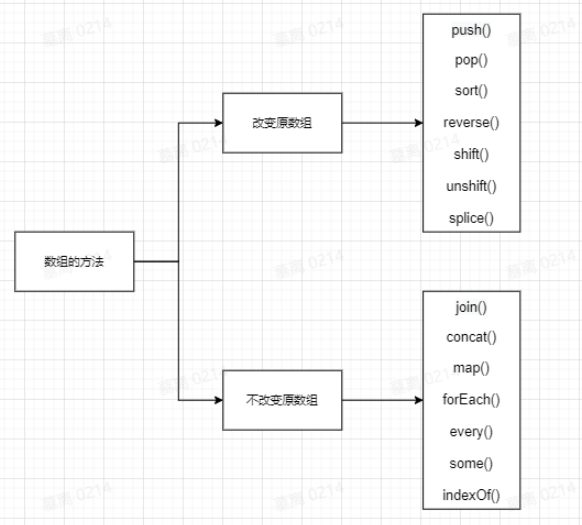
本文我们暂不讨论不改变原数组的方法,只谈改变原数组用到的 6 种方法。
改变原数组的方法
push()
按参数顺序向数组尾部添加元素,返回新数组的长度
var
color
= [
'red',
'green']


var
color2
=
color2.
push([
'blue',
'purple'])


alert(
color)
// ['red', 'green']


alert(
color2)
// ['red', 'green','blue','purple']
重写:
Array.
prototype.
_push
=
function() {


for(
let
i
=
0;
i
<
arguments.
length;
i
++) {


this[
this.
length]
=
arguments[
i]


    }


return
this.
length


}


var
arr1
= [
1,
2,
3]


console.
log(
arr1.
push(
4,
5))
// 返回新数组的长度  5


console.
log(
arr1.
_push(
6,
7))
// 返回新数组的长度  7


console.
log(
arr1)
// [1, 2, 3, 4, 5, 6, 7]
pop()
删除数组中的最后一个元素,并返回该元素
var
color
= [
'red',
'green',
'blue',
'purple']


var
color2
=
color.
pop()


alert(
color)
// ['red','green','blue']


alert(
color2)
// ['purple']


Array.
prototype.
_pop()
=
function() {


if(
this.
length) {


let
res
=
this[
this.
length
-
1]


delete
this[
this.
length]


this.
length
--


return
res


    }


}


let
arr2
= [
1,
2,
3,
4,
5]


console.
log(
arr2.
pop())
// 返回删除的元素 5


console.
log(
arr2.
_pop())
// 返回删除的元素 4


console.
log(
arr2)
// [1, 2, 3]
sort()
默认情况下,sort () 会按照升序重新排列数组元素,即最小的值在前面,最大的值在后面。因此,sort () 会在每一项上调用 string () 转换函数,然后比较字符串来决定顺序。即使数组的元素都是数值,也会先把数组转换成字符串再比较、排序。例如:
let
values
= [
0,
1,
5,
10,
15]


values.
sort()


console.
log(
values)
//0,1,10,15,5
一开始数组中的数值的顺序是正确的,但是调用 sort () 会按照这些数值的字符串形式重新排序。所以它可以接收一个比较函数,用于判断哪个值应该排在前面。
function
compare(
a,
b) {


if(
a
<
b)
return
-
1


else
if(
a
>
b)
return
1


else
return
0


}
这个比较函数可以适用于大多数数据类型,可以把他当做参数传给 sort (),例如:
let
values
= [
0,
1,
5,
10,
15]


values.
sort(
compare)


console.
log(
values)
// 0,1,5,10,15
当然,也可以使排序产生降序效果,只需要把返回值交换一下即可:
function
compare(
a,
b) {


if(
a
<
b)
return
1


else
if(
a
>
b)
return
-
1


else
return
0


}


let
values
= [
0,
1,
5,
10,
15]


values.
sort(
compare)


console.
log(
values)
// 15,10,5,1,0
重写:
var
arr
= [
4,
1,
6,
9,
3,
2,
8,
7]


var
arr2
= [
4,
1,
6,
9,
3,
2,
8,
7]


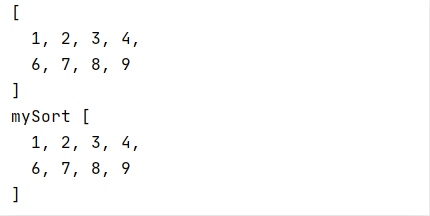
console.
log(
arr.
sort());


Array.
prototype.
mySort
=
function (
arr) {


for (
var
i
=
0;
i
<
this.
length;
i
++) {


for (
var
j
=
i
+
1;
j
<
this.
length;
j
++) {


if (
this[
i]
>
this[
j]) {


var
temp
=
this[
i]


this[
i]
=
this[
j]


this[
j]
=
temp;


         }


      }


   }


return
this


}


console.
log(
'mySort:',
arr2.
mySort());
reverse()
将数组倒叙,改变原数组
Array.
prototype.
myReverse
=
function () {


var
left
=
0,


right
=
this.
length
-
1;


while (
left
<
right) {


var
temp
=
this[
left];


this[
left]
=
this[
right];


this[
right]
=
temp;


left
++;


right
--;


   }


}


var
arr2
= [
1,
3,
5,
7,
9]


console.
log(
'before:',
arr2)


myReverse(
arr2)


console.
log(
'after:',
arr2)
shift()
删除数组第一个元素,并返回该元素
var
arr
= [
1,
3,
5,
7]


console.
log(
arr.
unshift(
9))


console.
log(
arr)


Array.
prototype.
myUnshift
=
function () {


var
L
=
this.
length;


var
newArr
=
arguments.
length


for (
var
i
=
L
+
newArr
-
1;
i
>=
0;
i
--) {


if (
i
>
newArr
-
1) {


this[
i]
=
this[
i
-
newArr];


      }
else {


this[
i]
=
arguments[
i];


      }


   }


return
this.
length;


}


var
arr2
= [
1,
3,
5,
7,]


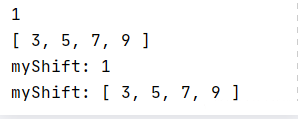
console.
log(
'myUnshift:',
arr2.
myUnshift(
9));


console.
log(
'myUnshift:',
arr2)
unshift()
var
arr
= [
1,
3,
5,
7]


console.
log(
arr.
unshift(
9))


console.
log(
arr)


Array.
prototype.
myUnshift
=
function () {


var
L
=
this.
length;


var
newArr
=
arguments.
length


for (
var
i
=
L
+
newArr
-
1;
i
>=
0;
i
--) {


if (
i
>
newArr
-
1) {


this[
i]
=
this[
i
-
newArr];


      }
else {


this[
i]
=
arguments[
i];


      }


   }


return
this.
length;


}


var
arr2
= [
1,
3,
5,
7,]


console.
log(
'myUnshift:',
arr2.
myUnshift(
9));


console.
log(
'myUnshift:',
arr2)
来自 “ ITPUB博客 ” ,链接:https://blog.itpub.net/70021806/viewspace-2914133/ ,如需转载,请注明出处,否则将追究法律责任。
上一篇:
Golang 常见设计模式之装饰模式
下一篇:
一文读懂浏览器存储与缓存机制

请登录后发表评论
登录
全部评论
