一、引言
海外商城从印度做起,慢慢的会有一些其他国家的诉求,这个时候需要我们针对当前的商城做一个改造,可以支撑多个国家的商城,这里会涉及多个问题,多语言,多国家,多时区,本地化等等。在多国家的情况下如何把识别出来的国家信息传递下去,一层一层直到代码执行的最后一步。甚至还有一些多线程的场景需要处理。
二、背景技术
2.1 ThreadLocal
ThreadLocal是最容易想到了,入口识别到国家信息后,丢进ThreadLocal,这样后续代码、redis、DB等做国家区分的时候都能使用到。
这里先简单介绍一下ThreadLocal:
|
1
2
3
4
5
6
7
8
9
10
11
12
13
14
15
16
17
18
19
20
21
22
23
24
25
26
27
28
29
30
31
32
33
34
35
36
37
38
39
40
41
42
43
44
45
46
47
48
49
50
51
52
53
54
55
56
57
58
59
60
61
62
63
64
65
66
67
68
69
70
71
72 |
/**
* Sets the current thread's copy of this thread-local variable
* to the specified value. Most subclasses will have no need to
* override this method, relying solely on the {@link #initialValue}
* method to set the values of thread-locals.
*
* @param value the value to be stored in the current thread's copy of
* this thread-local.
*/public
void
set(T value) {
Thread t = Thread.currentThread();
ThreadLocalMap map = getMap(t);
if
(map !=
null
)
map.set(
this
, value);
else
createMap(t, value);} /**
* Returns the value in the current thread's copy of this
* thread-local variable. If the variable has no value for the
* current thread, it is first initialized to the value returned
* by an invocation of the {@link #initialValue} method.
*
* @return the current thread's value of this thread-local
*/public
T get() {
Thread t = Thread.currentThread();
ThreadLocalMap map = getMap(t);
if
(map !=
null
) {
ThreadLocalMap.Entry e = map.getEntry(
this
);
if
(e !=
null
) {
@SuppressWarnings
(
"unchecked"
)
T result = (T)e.value;
return
result;
}
}
return
setInitialValue();} /**
* Get the map associated with a ThreadLocal. Overridden in
* InheritableThreadLocal.
*
* @param t the current thread
* @return the map
*/ThreadLocalMap getMap(Thread t) {
return
t.threadLocals;} /**
* Get the entry associated with key. This method
* itself handles only the fast path: a direct hit of existing
* key. It otherwise relays to getEntryAfterMiss. This is
* designed to maximize performance for direct hits, in part
* by making this method readily inlinable.
*
* @param key the thread local object
* @return the entry associated with key, or null if no such
*/private
Entry getEntry(ThreadLocal<?> key) {
int
i = key.threadLocalHashCode & (table.length -
1
);
Entry e = table[i];
if
(e !=
null
&& e.get() == key)
return
e;
else
return
getEntryAfterMiss(key, i, e);} |
- 每一个Thread线程都有属于自己的threadLocals(ThreadLocalMap),里面有一个弱引用的Entry(ThreadLocal,Object)。
- get方法首先通过Thread.currentThread得到当前线程,然后拿到线程的threadLocals(ThreadLocalMap),再从Entry中取得当前线程存储的value。
- set值的时候更改当前线程的threadLocals(ThreadLocalMap)中Entry对应的value值。
实际使用中除了同步方法之外,还有起异步线程处理的场景,这个时候就需要把ThreadLocal的内容从父线程传递给子线程,这个怎么办呢?
不急,Java 还有InheritableThreadLocal来帮我们解决这个问题。
2.2 InheritableThreadLoca
|
1
2
3
4
5
6
7
8
9
10
11
12
13
14
15
16
17
18
19
20
21
22
23
24
25
26
27
28
29
30
31
32
33
34
35
36 |
public
class
InheritableThreadLocal<T>
extends
ThreadLocal<T> {
/**
* Computes the child's initial value for this inheritable thread-local
* variable as a function of the parent's value at the time the child
* thread is created. This method is called from within the parent
* thread before the child is started.
* <p>
* This method merely returns its input argument, and should be overridden
* if a different behavior is desired.
*
* @param parentValue the parent thread's value
* @return the child thread's initial value
*/
protected
T childValue(T parentValue) {
return
parentValue;
}
/**
* Get the map associated with a ThreadLocal.
*
* @param t the current thread
*/
ThreadLocalMap getMap(Thread t) {
return
t.inheritableThreadLocals;
}
/**
* Create the map associated with a ThreadLocal.
*
* @param t the current thread
* @param firstValue value for the initial entry of the table.
*/
void
createMap(Thread t, T firstValue) {
t.inheritableThreadLocals =
new
ThreadLocalMap(
this
, firstValue);
}} |
- java.lang.Thread#init(java.lang.ThreadGroup, java.lang.Runnable, java.lang.String, long, java.security.AccessControlContext, boolean)
|
1
2
3 |
if
(inheritThreadLocals && parent.inheritableThreadLocals !=
null
)
this
.inheritableThreadLocals =
ThreadLocal.createInheritedMap(parent.inheritableThreadLocals); |
- InheritableThreadLocal操作的是inheritableThreadLocals这个变量,而不是ThreadLocal操作的threadLocals变量。
- 创建新线程的时候会检查父线程中parent.inheritableThreadLocals变量是否为null,如果不为null则复制一份parent.inheritableThreadLocals的数据到子线程的this.inheritableThreadLocals中去。
- 因为复写了getMap(Thread)和CreateMap()方法直接操作inheritableThreadLocals,这样就实现了在子线程中获取父线程ThreadLocal值。
现在在使用多线程的时候,都是通过线程池来做的,这个时候用InheritableThreadLocal可以吗?会有什么问题吗?先看下下面的代码的执行情况:
-
test

|
1
2
3
4
5
6
7
8
9
10
11
12
13
14
15
16
17
18
19
20
21
22
23
24
25
26
27
28
29
30
31
32
33
34
35
36
37
38
39
40
41
42
43
44
45
46
47
48
49
50
51
52
53
54
55
56
57
58
59
60
61
62
63 |
static
InheritableThreadLocal<String> inheritableThreadLocal =
new
InheritableThreadLocal<>(); public
static
void
main(String[] args)
throws
InterruptedException {
ExecutorService executorService = Executors.newFixedThreadPool(
1
);
inheritableThreadLocal.set(
"i am a inherit parent"
);
executorService.execute(
new
Runnable() {
@Override
public
void
run() {
System.out.println(inheritableThreadLocal.get());
}
});
TimeUnit.SECONDS.sleep(
1
);
inheritableThreadLocal.set(
"i am a new inherit parent"
);
// 设置新的值
executorService.execute(
new
Runnable() {
@Override
public
void
run() {
System.out.println(inheritableThreadLocal.get());
}
});} i am a inherit parenti am a inherit parent public
static
void
main(String[] args)
throws
InterruptedException {
ExecutorService executorService = Executors.newFixedThreadPool(
1
);
inheritableThreadLocal.set(
"i am a inherit parent"
);
executorService.execute(
new
Runnable() {
@Override
public
void
run() {
System.out.println(inheritableThreadLocal.get());
inheritableThreadLocal.set(
"i am a old inherit parent"
);
// 子线程中设置新的值
}
});
TimeUnit.SECONDS.sleep(
1
);
inheritableThreadLocal.set(
"i am a new inherit parent"
);
// 主线程设置新的值
executorService.execute(
new
Runnable() {
@Override
public
void
run() {
System.out.println(inheritableThreadLocal.get());
}
});} i am a inherit parenti am a old inherit parent |
这里看第一个执行结果,发现主线程第二次设置的值,没有改掉,还是第一次设置的值“i am a inherit parent”,这是什么原因呢?
再看第二个例子的执行结果,发现在第一个任务中设置的“i am a old inherit parent"的值,在第二个任务中打印出来了。这又是什么原因呢?
回过头来看看上面的源码,在线程池的情况下,第一次创建线程的时候会从父线程中copy inheritableThreadLocals中的数据,所以第一个任务成功拿到了父线程设置的”i am a inherit parent“,第二个任务执行的时候复用了第一个任务的线程,并不会触发复制父线程中的inheritableThreadLocals操作,所以即使在主线程中设置了新的值,也会不生效。同时get()方法是直接操作inheritableThreadLocals这个变量的,所以就直接拿到了第一个任务设置的值。
那遇到线程池应该怎么办呢?
2.3 TransmittableThreadLocal
TransmittableThreadLocal(TTL)这个时候就派上用场了。这是阿里开源的一个组件,我们来看看它怎么解决线程池的问题,先来一段代码,在上面的基础上修改一下,使用TransmittableThreadLocal。
|
1
2
3
4
5
6
7
8
9
10
11
12
13
14
15
16
17
18
19
20
21
22
23
24
25
26
27
28
29
30
31
32
33
34
35
36 |
static
TransmittableThreadLocal<String> transmittableThreadLocal =
new
TransmittableThreadLocal<>();
// 使用TransmittableThreadLocal public
static
void
main(String[] args)
throws
InterruptedException {
ExecutorService executorService = Executors.newFixedThreadPool(
1
);
executorService = TtlExecutors.getTtlExecutorService(executorService);
// 用TtlExecutors装饰线程池
transmittableThreadLocal.set(
"i am a transmittable parent"
);
executorService.execute(
new
Runnable() {
@Override
public
void
run() {
System.out.println(transmittableThreadLocal.get());
transmittableThreadLocal.set(
"i am a old transmittable parent"
);
// 子线程设置新的值
}
});
System.out.println(transmittableThreadLocal.get());
TimeUnit.SECONDS.sleep(
1
);
transmittableThreadLocal.set(
"i am a new transmittable parent"
);
// 主线程设置新的值
executorService.execute(
new
Runnable() {
@Override
public
void
run() {
System.out.println(transmittableThreadLocal.get());
}
});} i am a transmittable parenti am a transmittable parenti am a
new
transmittable parent |
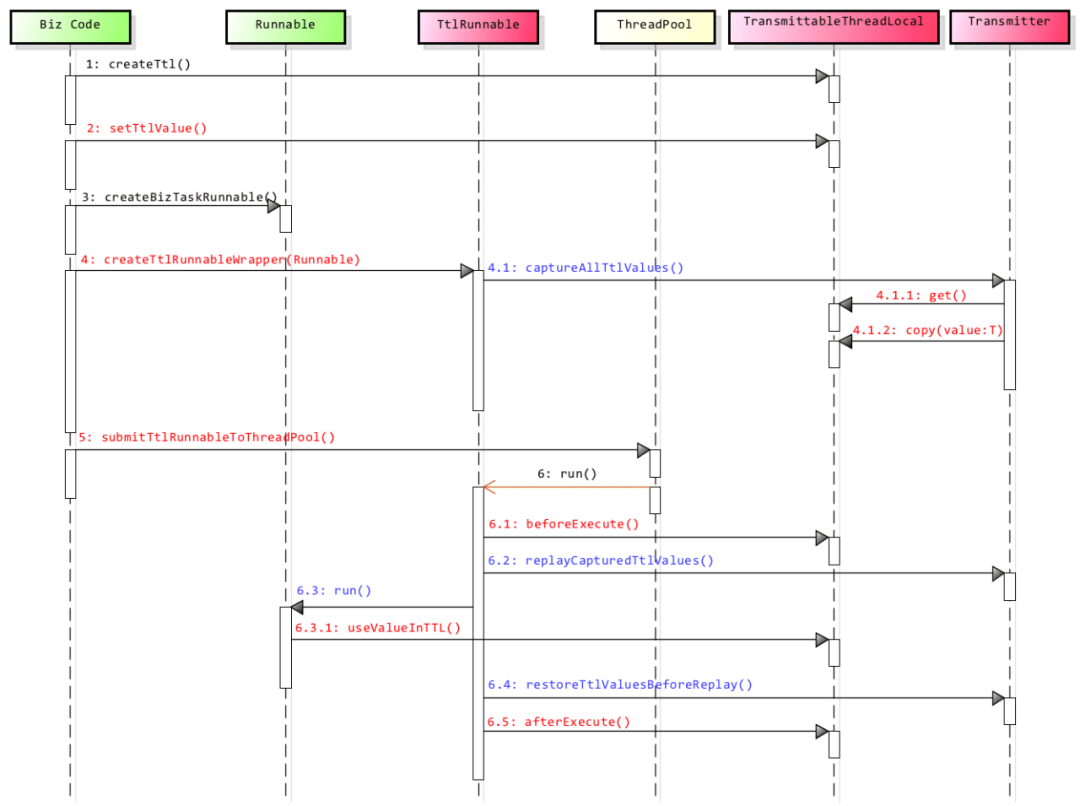
执行代码后发现,使用TransmittableThreadLocalTtlExecutors.getTtlExecutorService(executorService)装饰线程池之后,在每次调用任务的时,都会将当前的主线程的TransmittableThreadLocal数据copy到子线程里面,执行完成后,再清除掉。同时子线程里面的修改回到主线程时其实并没有生效。这样可以保证每次任务执行的时候都是互不干涉的。这是怎么做到的呢?来看源码。
-
TtlExecutors和TransmittableThreadLocal源码
|
1
2
3
4
5
6
7
8
9
10
11
12
13
14
15
16
17
18
19
20
21
22
23
24
25
26
27
28
29
30
31
32
33
34
35
36
37
38
39
40
41
42
43
44
45
46
47
48
49
50
51
52
53
54
55
56
57
58
59
60
61
62
63
64
65
66
67
68
69
70
71
72
73
74
75
76
77
78
79
80
81
82
83
84
85
86
87
88
89
90
91
92
93
94
95
96
97
98
99
100
101
102
103
104
105
106
107
108 |
private
TtlRunnable(Runnable runnable,
boolean
releaseTtlValueReferenceAfterRun) {
this
.capturedRef =
new
AtomicReference<Object>(capture());
this
.runnable = runnable;
this
.releaseTtlValueReferenceAfterRun = releaseTtlValueReferenceAfterRun;} com.alibaba.ttl.TtlRunnable#run/**
* wrap method {@link Runnable#run()}.
*/@Overridepublic
void
run() {
Object captured = capturedRef.get();
// 获取线程的ThreadLocalMap
if
(captured ==
null
|| releaseTtlValueReferenceAfterRun && !capturedRef.compareAndSet(captured,
null
)) {
throw
new
IllegalStateException(
"TTL value reference is released after run!"
);
}
Object backup = replay(captured);
// 暂存当前子线程的ThreadLocalMap到backup
try
{
runnable.run();
}
finally
{
restore(backup);
// 恢复线程执行时被改版的Threadlocal对应的值
}} com.alibaba.ttl.TransmittableThreadLocal.Transmitter#replay /**
* Replay the captured {@link TransmittableThreadLocal} values from {@link #capture()},
* and return the backup {@link TransmittableThreadLocal} values in current thread before replay.
*
* @param captured captured {@link TransmittableThreadLocal} values from other thread from {@link #capture()}
* @return the backup {@link TransmittableThreadLocal} values before replay
* @see #capture()
* @since 2.3.0
*/public
static
Object replay(Object captured) {
@SuppressWarnings
(
"unchecked"
)
Map<TransmittableThreadLocal<?>, Object> capturedMap = (Map<TransmittableThreadLocal<?>, Object>) captured;
Map<TransmittableThreadLocal<?>, Object> backup =
new
HashMap<TransmittableThreadLocal<?>, Object>();
for
(Iterator<?
extends
Map.Entry<TransmittableThreadLocal<?>, ?>> iterator = holder.get().entrySet().iterator();
iterator.hasNext(); ) {
Map.Entry<TransmittableThreadLocal<?>, ?> next = iterator.next();
TransmittableThreadLocal<?> threadLocal = next.getKey();
// backup
backup.put(threadLocal, threadLocal.get());
// clear the TTL value only in captured
// avoid extra TTL value in captured, when run task.
if
(!capturedMap.containsKey(threadLocal)) {
iterator.remove();
threadLocal.superRemove();
}
}
// set value to captured TTL
for
(Map.Entry<TransmittableThreadLocal<?>, Object> entry : capturedMap.entrySet()) {
@SuppressWarnings
(
"unchecked"
)
TransmittableThreadLocal<Object> threadLocal = (TransmittableThreadLocal<Object>) entry.getKey();
threadLocal.set(entry.getValue());
}
// call beforeExecute callback
doExecuteCallback(
true
);
return
backup;} com.alibaba.ttl.TransmittableThreadLocal.Transmitter#restore /**
* Restore the backup {@link TransmittableThreadLocal} values from {@link Transmitter#replay(Object)}.
*
* @param backup the backup {@link TransmittableThreadLocal} values from {@link Transmitter#replay(Object)}
* @since 2.3.0
*/public
static
void
restore(Object backup) {
@SuppressWarnings
(
"unchecked"
)
Map<TransmittableThreadLocal<?>, Object> backupMap = (Map<TransmittableThreadLocal<?>, Object>) backup;
// call afterExecute callback
doExecuteCallback(
false
);
for
(Iterator<?
extends
Map.Entry<TransmittableThreadLocal<?>, ?>> iterator = holder.get().entrySet().iterator();
iterator.hasNext(); ) {
Map.Entry<TransmittableThreadLocal<?>, ?> next = iterator.next();
TransmittableThreadLocal<?> threadLocal = next.getKey();
// clear the TTL value only in backup
// avoid the extra value of backup after restore
if
(!backupMap.containsKey(threadLocal)) {
iterator.remove();
threadLocal.superRemove();
}
}
// restore TTL value
for
(Map.Entry<TransmittableThreadLocal<?>, Object> entry : backupMap.entrySet()) {
@SuppressWarnings
(
"unchecked"
)
TransmittableThreadLocal<Object> threadLocal = (TransmittableThreadLocal<Object>) entry.getKey();
threadLocal.set(entry.getValue());
}} |
可以看下整个过程的完整时序图:
OK,既然问题都解决了,来看看实际使用吧,有两种使用,先看第一种,涉及HTTP请求、Dubbo请求和 job,采用的是数据级别的隔离。
三、 TTL 在海外商城的实际应用
3.1 不分库,分数据行 + SpringMVC
用户 HTTP 请求,首先我们要从url或者cookie中解析出国家编号,然后在TransmittableThreadLocal中存放国家信息,在 MyBatis 的拦截器中读取国家数据,进行sql改造,最终操作指定的国家数据,多线程场景下用TtlExecutors包装原有自定义线程池,保障在使用线程池的时候能够正确将国家信息传递下去。
-
HTTP 请求
|
1
2
3
4
5
6
7
8
9
10
11
12
13
14
15
16
17
18
19
20
21
22
23
24
25
26
27
28
29
30
31
32
33
34
35
36
37
38
39
40
41
42
43
44
45
46
47
48
49
50
51
52
53
54
55
56
57
58
59
60
61
62
63
64
65
66
67
68
69
70
71
72
73
74
75
76
77
78
79
80
81
82
83
84
85
86
87
88
89
90
91
92
93
94
95
96
97
98
99
100
101
102
103
104
105
106
107
108
109
110
111 |
public
class
ShopShardingHelperUtil {
private
static
TransmittableThreadLocal<String> countrySet =
new
TransmittableThreadLocal<>();
/**
* 获取threadLocal中设置的国家标志
* @return
*/
public
static
String getCountry() {
return
countrySet.get();
}
/**
* 设置threadLocal中设置的国家
*/
public
static
void
setCountry (String country) {
countrySet.set(country.toLowerCase());
}
/**
* 清除标志
*/
public
static
void
clear () {
countrySet.remove();
}} /** 拦截器对cookie和url综合判断国家信息,放入到TransmittableThreadLocal中 **/// 设置线程中的国家标志String country = localeContext.getLocale().getCountry().toLowerCase(); ShopShardingHelperUtil.setCountry(country); /** 自定义线程池,用TtlExecutors包装原有自定义线程池 **/public
static
Executor getExecutor() {
if
(executor ==
null
) {
synchronized
(TransmittableExecutor.
class
) {
if
(executor ==
null
) {
executor = TtlExecutors.getTtlExecutor(initExecutor());
// 用TtlExecutors装饰Executor,结合TransmittableThreadLocal解决异步线程threadlocal传递问题
}
}
}
return
executor;} /** 实际使用线程池的地方,直接调用执行即可**/TransmittableExecutor.getExecutor().execute(
new
BatchExeRunnable(param1,param2)); /** mybatis的Interceptor代码, 使用TransmittableThreadLocal的国家信息,改造原有sql,加上国家参数,在增删改查sql中区分国家数据 **/public
Object intercept(Invocation invocation)
throws
Throwable {
StatementHandler statementHandler = (StatementHandler) invocation.getTarget();
BoundSql boundSql = statementHandler.getBoundSql();
String originalSql = boundSql.getSql();
Statement statement = (Statement) CCJSqlParserUtil.parse(originalSql);
String threadCountry = ShopShardingHelperUtil.getCountry();
// 线程中的国家不为空才进行处理
if
(StringUtils.isNotBlank(threadCountry)) {
if
(statement
instanceof
Select) {
Select selectStatement = (Select) statement;
VivoSelectVisitor vivoSelectVisitor =
new
VivoSelectVisitor(threadCountry);
vivoSelectVisitor.init(selectStatement);
}
else
if
(statement
instanceof
Insert) {
Insert insertStatement = (Insert) statement;
VivoInsertVisitor vivoInsertVisitor =
new
VivoInsertVisitor(threadCountry);
vivoInsertVisitor.init(insertStatement);
}
else
if
(statement
instanceof
Update) {
Update updateStatement = (Update) statement;
VivoUpdateVisitor vivoUpdateVisitor =
new
VivoUpdateVisitor(threadCountry);
vivoUpdateVisitor.init(updateStatement);
}
else
if
(statement
instanceof
Delete) {
Delete deleteStatement = (Delete) statement;
VivoDeleteVisitor vivoDeleteVisitor =
new
VivoDeleteVisitor(threadCountry);
vivoDeleteVisitor.init(deleteStatement);
}
Field boundSqlField = BoundSql.
class
.getDeclaredField(
"sql"
);
boundSqlField.setAccessible(
true
);
boundSqlField.set(boundSql, statement.toString());
}
else
{
logger.error(
"----------- intercept not-add-country sql.... ---------"
+ statement.toString());
}
logger.info(
"----------- intercept query new sql.... ---------"
+ statement.toString());
// 调用方法,实际上就是拦截的方法
Object result = invocation.proceed();
return
result;} |
对于 Dubbo 接口和无法判断国家信息的 HTTP 接口,在入参部分增加国家信息参数,通过拦截器或者手动set国家信息到TransmittableThreadLocal。
对于定时任务 job,因为所有国家都需要执行,所以会把所有国家进行遍历执行,这也可以通过简单的注解来解决。
这个版本的改造,点检测试也基本通过了,自动化脚本验证也是没问题的,不过因为业务发展问题最终没上线。
3.2 分库 + SpringBoot
后续在建设新的国家商城的时候,分库分表方案调整为每个国家独立数据库,同时整体开发框架升级到SpringBoot,我们把这套方案做了升级,总体思路是一样的,只是在实现细节上略有不同。
SpringBoot 里面的异步一般通过 @Async这个注解来实现,通过自定义线程池来包装,使用时在 HTTP 请求判断locale信息的写入国家信息,后续完成切DB的操作。
对于 Dubbo 接口和无法判断国家信息的 HTTP 接口,在入参部分增加国家信息参数,通过拦截器或者手动set国家信息到TransmittableThreadLocal。
|
1
2
3
4
5
6
7
8
9
10
11
12
13
14
15
16
17
18
19
20
21
22
23
24
25
26
27
28
29
30
31
32
33
34
35
36
37
38
39
40
41
42
43
44
45
46
47
48
49
50
51
52
53
54
55
56
57
58
59
60
61
62
63
64
65
66
67
68
69
70
71
72
73
74
75
76
77
78
79
80
81
82
83
84
85
86
87
88
89
90
91
92
93
94
95
96
97
98
99
100
101
102
103
104
105
106
107
108
109
110
111
112
113
114
115
116
117
118
119
120
121
122
123
124
125
126
127
128
129
130
131
132
133
134
135
136
137
138
139
140
141
142
143
144
145
146
147
148
149
150
151
152
153
154
155
156
157
158
159
160
161
162
163
164
165
166 |
@Beanpublic
ThreadPoolTaskExecutor threadPoolTaskExecutor(){
return
TtlThreadPoolExecutors.getAsyncExecutor();} public
class
TtlThreadPoolExecutors {
private
static
final
String COMMON_BUSINESS =
"COMMON_EXECUTOR"
;
public
static
final
int
QUEUE_CAPACITY =
20000
;
public
static
ExecutorService getExecutorService() {
return
TtlExecutorServiceMananger.getExecutorService(COMMON_BUSINESS);
}
public
static
ExecutorService getExecutorService(String threadGroupName) {
return
TtlExecutorServiceMananger.getExecutorService(threadGroupName);
}
public
static
ThreadPoolTaskExecutor getAsyncExecutor() {
// 用TtlExecutors装饰Executor,结合TransmittableThreadLocal解决异步线程threadlocal传递问题
return
getTtlThreadPoolTaskExecutor(initTaskExecutor());
}
private
static
ThreadPoolTaskExecutor initTaskExecutor () {
return
initTaskExecutor(TtlThreadPoolFactory.DEFAULT_CORE_SIZE, TtlThreadPoolFactory.DEFAULT_POOL_SIZE, QUEUE_CAPACITY);
}
private
static
ThreadPoolTaskExecutor initTaskExecutor (
int
coreSize,
int
poolSize,
int
executorQueueCapacity) {
ThreadPoolTaskExecutor taskExecutor =
new
ThreadPoolTaskExecutor();
taskExecutor.setCorePoolSize(coreSize);
taskExecutor.setMaxPoolSize(poolSize);
taskExecutor.setQueueCapacity(executorQueueCapacity);
taskExecutor.setKeepAliveSeconds(
120
);
taskExecutor.setAllowCoreThreadTimeOut(
true
);
taskExecutor.setThreadNamePrefix(
"TaskExecutor-ttl"
);
taskExecutor.initialize();
return
taskExecutor;
}
private
static
ThreadPoolTaskExecutor getTtlThreadPoolTaskExecutor(ThreadPoolTaskExecutor executor) {
if
(
null
== executor || executor
instanceof
ThreadPoolTaskExecutorWrapper) {
return
executor;
}
return
new
ThreadPoolTaskExecutorWrapper(executor);
}} /**
* @ClassName : LocaleContextHolder
* @Description : 本地化信息上下文holder
*/public
class
LocalizationContextHolder {
private
static
TransmittableThreadLocal<LocalizationContext> localizationContextHolder =
new
TransmittableThreadLocal<>();
private
static
LocalizationInfo defaultLocalizationInfo =
new
LocalizationInfo();
private
LocalizationContextHolder(){}
public
static
LocalizationContext getLocalizationContext() {
return
localizationContextHolder.get();
}
public
static
void
resetLocalizationContext () {
localizationContextHolder.remove();
}
public
static
void
setLocalizationContext (LocalizationContext localizationContext) {
if
(localizationContext ==
null
) {
resetLocalizationContext();
}
else
{
localizationContextHolder.set(localizationContext);
}
}
public
static
void
setLocalizationInfo (LocalizationInfo localizationInfo) {
LocalizationContext localizationContext = getLocalizationContext();
String brand = (localizationContext
instanceof
BrandLocalizationContext ?
((BrandLocalizationContext) localizationContext).getBrand() :
null
);
if
(StringUtils.isNotEmpty(brand)) {
localizationContext =
new
SimpleBrandLocalizationContext(localizationInfo, brand);
}
else
if
(localizationInfo !=
null
) {
localizationContext =
new
SimpleLocalizationContext(localizationInfo);
}
else
{
localizationContext =
null
;
}
setLocalizationContext(localizationContext);
}
public
static
void
setDefaultLocalizationInfo(
@Nullable
LocalizationInfo localizationInfo) {
LocalizationContextHolder.defaultLocalizationInfo = localizationInfo;
}
public
static
LocalizationInfo getLocalizationInfo () {
LocalizationContext localizationContext = getLocalizationContext();
if
(localizationContext !=
null
) {
LocalizationInfo localizationInfo = localizationContext.getLocalizationInfo();
if
(localizationInfo !=
null
) {
return
localizationInfo;
}
}
return
defaultLocalizationInfo;
}
public
static
String getCountry(){
return
getLocalizationInfo().getCountry();
}
public
static
String getTimezone(){
return
getLocalizationInfo().getTimezone();
}
public
static
String getBrand(){
return
getBrand(getLocalizationContext());
}
public
static
String getBrand(LocalizationContext localizationContext) {
if
(localizationContext ==
null
) {
return
null
;
}
if
(localizationContext
instanceof
BrandLocalizationContext) {
return
((BrandLocalizationContext) localizationContext).getBrand();
}
throw
new
LocaleException(
"unsupported localizationContext type"
);
}}
@Override
public
LocaleContext resolveLocaleContext(
final
HttpServletRequest request) {
parseLocaleCookieIfNecessary(request);
LocaleContext localeContext =
new
TimeZoneAwareLocaleContext() {
@Override
public
Locale getLocale() {
return
(Locale) request.getAttribute(LOCALE_REQUEST_ATTRIBUTE_NAME);
}
@Override
public
TimeZone getTimeZone() {
return
(TimeZone) request.getAttribute(TIME_ZONE_REQUEST_ATTRIBUTE_NAME);
}
};
// 设置线程中的国家标志
setLocalizationInfo(request, localeContext.getLocale());
return
localeContext;
}
private
void
setLocalizationInfo(HttpServletRequest request, Locale locale) {
String country = locale!=
null
?locale.getCountry():
null
;
String language = locale!=
null
?(locale.getLanguage() +
"_"
+ locale.getVariant()):
null
;
LocaleRequestMessage localeRequestMessage = localeRequestParser.parse(request);
final
String countryStr = country;
final
String languageStr = language;
final
String brandStr = localeRequestMessage.getBrand();
LocalizationContextHolder.setLocalizationContext(
new
BrandLocalizationContext() {
@Override
public
String getBrand() {
return
brandStr;
}
@Override
public
LocalizationInfo getLocalizationInfo() {
return
LocalizationInfoAssembler.assemble(countryStr, languageStr);
}
});
} |
对于定时任务job,因为所有国家都需要执行,所以会把所有国家进行遍历执行,这也可以通过简单的注解和AOP来解决。
四、总结
本文从业务拓展的角度阐述了在复杂业务场景下如何通过ThreadLocal,过渡到InheritableThreadLocal,再通过TransmittableThreadLocal解决实际业务问题。因为海外的业务在不断的探索中前进,技术也在不断的探索中演进,面对这种复杂多变的情况,我们的应对策略是先做国际化,再做本地化,more global才能more local,多国家的隔离只是国际化最基本的起点,未来还有很多业务和技术等着我们去挑战。
作者:vivo 官网商城开发团队

