确实,它简单、高效、趋势递增,但你知道吗?
雪花算法的隐蔽的坑不少。
今天这篇文章跟大家一起聊聊雪花算法的 5大坑,希望对你会有所帮助。
一、雪花算法:美丽的陷阱
先简单回顾一下雪花算法的结构。
标准的雪花算法ID由64位组成:
// 典型的雪花算法结构public class SnowflakeId {    // 64位ID结构
    // 1位符号位(始终为0) +
    // 41位时间戳(毫秒级) +
    // 10位机器ID +
    // 12位序列号

    private long timestampBits = 41;  // 时间戳占41位
    private long workerIdBits = 10;   // 机器ID占10位
    private long sequenceBits = 12;   // 序列号占12位

    // 最大支持值
    private long maxWorkerId = -1L ^ (-1L << workerIdBits);  // 1023
    private long maxSequence = -1L ^ (-1L << sequenceBits);  // 4095

    // 偏移量
    private long timestampShift = sequenceBits + workerIdBits;  // 22
    private long workerIdShift = sequenceBits;                  // 12}
看起来很美,对吧?
但美丽的背后,是五个需要警惕的深坑:
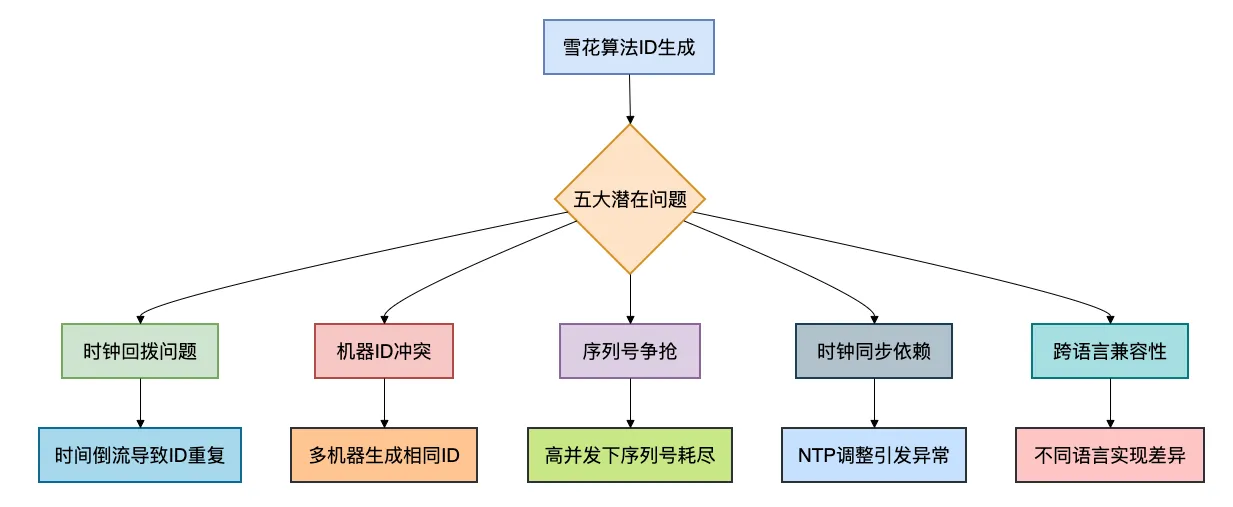
接下来,我们逐一深入分析这五个坑。
二、坑一:时钟回拨——最致命的陷阱
问题现象
有一天,我们线上订单系统突然出现大量重复ID。
排查后发现,有一台服务器的时间被NTP服务自动校准, 时钟回拨了2秒钟。
// 有问题的雪花算法实现public synchronized long nextId() {    long currentTimestamp = timeGen();
    // 问题代码:如果发现时钟回拨,直接抛异常
    if (currentTimestamp < lastTimestamp) {        throw new RuntimeException("时钟回拨异常");
    }
    // ... 生成ID的逻辑}
结果就是:时钟回拨的那台服务器完全不可用,所有请求都失败。
深度剖析
时钟为什么会回拨?
- NTP自动校准:网络时间协议会自动同步时间
- 人工误操作:运维手动调整了服务器时间
- 虚拟机暂停/恢复:虚拟机暂停后恢复,时钟可能跳跃
- 闰秒调整:UTC闰秒可能导致时钟回拨
在分布式系统中, 你无法保证所有服务器时钟完全一致,这是物理限制。
解决方案
方案1:等待时钟追上来(推荐)
public class SnowflakeIdWorker {    private long lastTimestamp = -1L;    private long sequence = 0L;
    public synchronized long nextId() {        long timestamp = timeGen();
        // 处理时钟回拨
        if (timestamp < lastTimestamp) {            long offset = lastTimestamp - timestamp;
            // 如果回拨时间较小(比如5毫秒内),等待
            if (offset <= 5) {                try {
                    wait(offset << 1);  // 等待两倍时间
                    timestamp = timeGen();                    if (timestamp < lastTimestamp) {                        throw new RuntimeException("时钟回拨过大");
                    }
                } catch (InterruptedException e) {
                    Thread.currentThread().interrupt();                    throw new RuntimeException("等待时钟同步被中断");
                }
            } else {                // 回拨过大,抛出异常
                throw new RuntimeException("时钟回拨过大: " + offset + "ms");
            }
        }
        // 正常生成ID的逻辑
        if (lastTimestamp == timestamp) {
            sequence = (sequence + 1) & maxSequence;            if (sequence == 0) {
                timestamp = tilNextMillis(lastTimestamp);
            }
        } else {
            sequence = 0L;
        }

        lastTimestamp = timestamp;
        return ((timestamp - twepoch) << timestampShift) |
                (workerId << workerIdShift) |
                sequence;
    }
    // 等待下一个毫秒
    private long tilNextMillis(long lastTimestamp) {        long timestamp = timeGen();        while (timestamp <= lastTimestamp) {
            timestamp = timeGen();
        }        return timestamp;
    }
}
方案2:使用扩展的workerId位
// 将部分workerId位用作回拨计数器public class SnowflakeWithBackward {    // 调整位分配:39位时间戳 + 13位机器ID + 3位回拨计数 + 9位序列号
    private static final long BACKWARD_BITS = 3L;  // 支持最多7次回拨

    private long backwardCounter = 0L;  // 回拨计数器

    public synchronized long nextId() {        long timestamp = timeGen();
        if (timestamp < lastTimestamp) {            // 时钟回拨,增加回拨计数器
            backwardCounter = (backwardCounter + 1) & ((1 << BACKWARD_BITS) - 1);
            if (backwardCounter == 0) {                // 回拨计数器溢出,抛出异常
                throw new RuntimeException("时钟回拨次数过多");
            }
            // 使用上次的时间戳,但带上回拨标记
            timestamp = lastTimestamp;
        } else {            // 时钟正常,重置回拨计数器
            backwardCounter = 0L;
        }
        // ... 生成ID,将backwardCounter也编码进去
    }
}
方案3:兜底方案——随机数填充
public class SnowflakeWithFallback {    // 当时钟回拨过大时,使用随机数生成器兜底
    private final Random random = new Random();
    public long nextId() {        try {            return snowflakeNextId();
        } catch (ClockBackwardException e) {            // 当时钟回拨无法处理时,使用随机ID兜底
            log.warn("时钟回拨,使用随机ID兜底", e);            return generateRandomId();
        }
    }
    private long generateRandomId() {        // 生成一个基于随机数的ID,但保证不会与正常ID冲突
        // 方法:最高位置1,标识这是兜底ID
        long randomId = random.nextLong() & Long.MAX_VALUE;        return randomId | (1L << 63);  // 最高位置1
    }
}
方案对比
| 方案 | 优点 | 缺点 | 适用场景 |
|---|---|---|---|
| 等待时钟 | 保持ID连续性 | 可能阻塞线程 | 回拨小的场景(<5ms) |
| 回拨计数器 | 不阻塞线程 | ID不连续 | 频繁小回拨场景 |
| 随机数兜底 | 保证可用性 | ID可能重复 | 紧急情况备用 |
三、坑二:机器ID分配难题
问题现象
假如公司有300多台服务器,但雪花算法只支持1024个机器ID。
更糟糕的是,有次扩容时, 两台机器配了相同的workerId,导致生成的ID大量重复。
深度剖析
机器ID分配为什么难?
- 数量限制:10位最多1024个ID
- 分配冲突:人工配置容易出错
- 动态伸缩:容器化环境下IP变动频繁
- ID回收:机器下线后ID何时可重用
解决方案
方案1:基于数据库分配
@Componentpublic class WorkerIdAssigner {
    @Autowired
    private JdbcTemplate jdbcTemplate;
    private Long workerId;
    @PostConstruct
    public void init() {        // 尝试获取或分配workerId
        this.workerId = assignWorkerId();
    }
    private Long assignWorkerId() {        String hostname = getHostname();        String ip = getLocalIp();
        // 查询是否已分配
        String sql = "SELECT worker_id FROM worker_assign WHERE hostname = ? OR ip = ?";
        List<Long> existingIds = jdbcTemplate.queryForList(sql, Long.class, hostname, ip);
        if (!existingIds.isEmpty()) {            return existingIds.get(0);
        }
        // 分配新的workerId
        for (int i = 0; i < 1024; i++) {            try {
                sql = "INSERT INTO worker_assign (worker_id, hostname, ip, created_time) VALUES (?, ?, ?, NOW())";                int updated = jdbcTemplate.update(sql, i, hostname, ip);                if (updated > 0) {
                    log.info("分配workerId成功: {} -> {}:{}", i, hostname, ip);                    return (long) i;
                }
            } catch (DuplicateKeyException e) {                // workerId已被占用,尝试下一个
                continue;
            }
        }
        throw new RuntimeException("没有可用的workerId");
    }
    // 心跳保活
    @Scheduled(fixedDelay = 30000)
    public void keepAlive() {        if (workerId != null) {            String sql = "UPDATE worker_assign SET last_heartbeat = NOW() WHERE worker_id = ?";
            jdbcTemplate.update(sql, workerId);
        }
    }
    @PreDestroy
    public void cleanup() {        // 应用关闭时释放workerId(可选)
        if (workerId != null) {            String sql = "DELETE FROM worker_assign WHERE worker_id = ?";
            jdbcTemplate.update(sql, workerId);
        }
    }
}
方案2:基于ZK/Etcd分配
public class ZkWorkerIdAssigner {
    private CuratorFramework client;    private String workerPath = "/snowflake/workers";    private Long workerId;
    public Long assignWorkerId() throws Exception {        // 创建持久化节点
        client.create().creatingParentsIfNeeded().forPath(workerPath);
        // 创建临时顺序节点
        String sequentialPath = client.create()
            .withMode(CreateMode.EPHEMERAL_SEQUENTIAL)
            .forPath(workerPath + "/worker-");
        // 提取序号作为workerId
        String sequenceStr = sequentialPath.substring(sequentialPath.lastIndexOf('-') + 1);        long sequence = Long.parseLong(sequenceStr);
        // 序号对1024取模得到workerId
        this.workerId = sequence % 1024;
        // 监听节点变化,如果连接断开自动释放
        client.getConnectionStateListenable().addListener((curator, newState) -> {            if (newState == ConnectionState.LOST || newState == ConnectionState.SUSPENDED) {
                log.warn("ZK连接异常,workerId可能失效: {}", workerId);
            }
        });
        return workerId;
    }
}
方案3:IP地址自动计算(推荐)
public class IpBasedWorkerIdAssigner {
    // 10位workerId,可以拆分为:3位机房 + 7位机器
    private static final long DATACENTER_BITS = 3L;    private static final long WORKER_BITS = 7L;
    public long getWorkerId() {        try {            String ip = getLocalIp();
            String[] segments =gov.zuqiu.zc.jrzb1.info ip.split("\\.");
            // 使用IP后两段计算workerId
            int third = Integer.parseInt(segments[2]);  // 0-255
            int fourth = Integer.parseInt(segments[3]); // 0-255

            // 机房ID:取第三段的低3位 (0-7)
            long datacenterId = third & ((1 << DATACENTER_BITS) - 1);
            // 机器ID:取第四段的低7位 (0-127)
            long workerId = fourth & ((1 << WORKER_BITS) - 1);
            // 合并:3位机房 + 7位机器 = 10位workerId
            return (datacenterId << WORKER_BITS) | workerId;

        } catch (Exception e) {            // 降级方案:使用随机数,但设置标志位
            log.warn("IP计算workerId失败,使用随机数", e);            return new Random().nextInt(1024) | (1L << 9); // 最高位置1表示随机
        }
    }
}
方案对比
| 方案 | 优点 | 缺点 | 适用场景 |
|---|---|---|---|
| 数据库分配 | 精确控制 | 依赖DB,有单点风险 | 中小规模固定集群 |
| ZK分配 | 自动故障转移 | 依赖ZK,复杂度高 | 大规模动态集群 |
| IP计算 | 简单无依赖 | IP可能冲突 | 网络规划规范的场景 |
四、坑三:序列号争抢与耗尽
问题现象
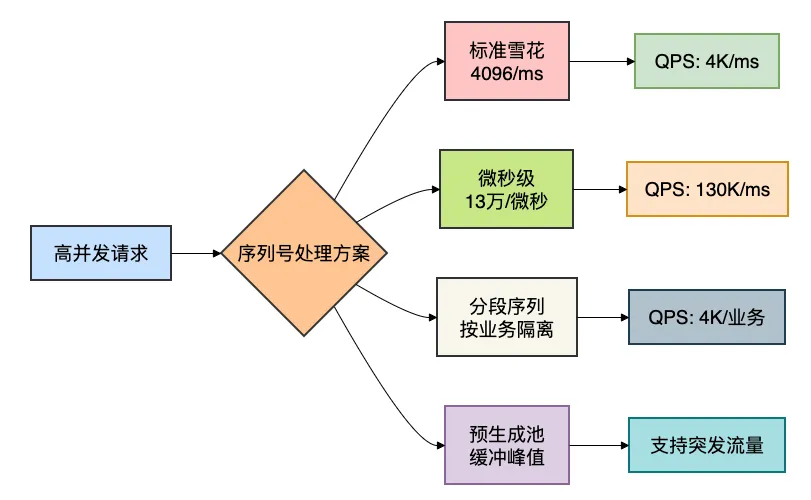
我们的订单服务在促销期间, 单机QPS达到5万,经常出现“序列号耗尽”的警告日志。
虽然雪花算法理论上支持4096/ms的序列号,但实际使用中发现,在高并发下还是可能不够用。
深度剖析
序列号为什么可能耗尽?
- 时间戳粒度:毫秒级时间戳,1ms内最多4096个ID
- 突发流量:秒杀场景下,1ms可能收到上万请求
- 时钟偏差:多台机器时钟不完全同步
- 序列号重置:每毫秒序列号从0开始
解决方案
方案1:减少时间戳粒度(微秒级)
public class MicrosecondSnowflake {    // 调整位分配:使用微秒级时间戳
    // 1位符号位 + 36位微秒时间戳 + 10位机器ID + 17位序列号

    private static final long TIMESTAMP_BITS = 36L;  // 微秒时间戳
    private static final long SEQUENCE_BITS = 17L;   // 13万/微秒

    private long lastMicroTimestamp = -1L;    private long sequence = 0L;
    public synchronized long nextId() {        long currentMicros = getCurrentMicroseconds();
        if (currentMicros < lastMicroTimestamp) {            // 处理时钟回拨
            throw new RuntimeException("时钟回拨");
        }
        if (currentMicros == lastMicroTimestamp) {
            sequence = (sequence + 1) & ((1 << SEQUENCE_BITS) - 1);            if (sequence == 0) {                // 等待下一个微秒
                currentMicros = waitNextMicros(lastMicroTimestamp);
            }
        } else {
            sequence = 0L;
        }

        lastMicroTimestamp = currentMicros;
        return ((currentMicros) << (SEQUENCE_BITS + WORKER_BITS)) |
               (workerId << SEQUENCE_BITS) |
               sequence;
    }
    private long getCurrentMicroseconds() {        // 获取微秒级时间戳
        return System.currentTimeMillis() * 1000 +
               (System.nanoTime() / 1000 % 1000);
    }
}
方案2:分段序列号
public class SegmentedSequenceSnowflake {    // 为不同的业务类型分配不同的序列号段
    private Map<String, Long> sequenceMap = new ConcurrentHashMap<>();
    public long nextId(String businessType) {        long timestamp = System.currentTimeMillis();
        // 获取该业务类型的序列号
        Long lastTimestamp = sequenceMap.get(businessType + "_ts");        Long sequence = sequenceMap.get(businessType);
        if (lastTimestamp == null || lastTimestamp != timestamp) {            // 新的毫秒,重置序列号
            sequence = 0L;
            sequenceMap.put(businessType + "_ts", timestamp);
        } else {            // 同一毫秒内,递增序列号
            sequence = sequence + 1;            if (sequence >= 4096) {                // 等待下一个毫秒
                timestamp = waitNextMillis(timestamp);
                sequence = 0L;
                sequenceMap.put(businessType + "_ts", timestamp);
            }
        }

        sequenceMap.put(businessType, sequence);
        // 将业务类型编码到workerId中
        long businessWorkerId = encodeBusinessType(workerId, businessType);
        return ((timestamp - twepoch) << timestampShift) |
                (businessWorkerId << workerIdShift) |
                sequence;
    }
    private long encodeBusinessType(long baseWorkerId, String businessType) {        // 使用workerId的高几位表示业务类型
        int typeCode = businessType.hashCode() & 0x1F;  // 5位,32种业务
        return (typeCode << 5) | (baseWorkerId & 0x1F);
    }
}
方案3:预生成ID池
public class IdPoolSnowflake {    // 预生成ID池,缓解瞬时压力
    private BlockingQueue<Long> idQueue = new LinkedBlockingQueue<>(10000);    private volatile boolean isGenerating = false;
    // 后台线程预生成ID
    private Thread generatorThread = new Thread(() -> {        while (!Thread.currentThread().isInterrupted()) {            try {                if (idQueue.size() < 5000 && !isGenerating) {
                    isGenerating = true;
                    generateBatchIds(1000);
                    isGenerating = false;
                }
                Thread.sleep(1);  // 短暂休眠
            } catch (InterruptedException e) {
                Thread.currentThread().interrupt();
            }
        }
    });
    public IdPoolSnowflake() {
        generatorThread.setDaemon(true);
        generatorThread.start();
    }
    public long nextId(mip.euakj.com) {        try {            // 从队列中获取预生成的ID
            Long id = idQueue.poll(10, TimeUnit.MILLISECONDS);            if (id != null) {                return id;
            }
            // 队列为空,同步生成
            log.warn("ID队列空,同步生成ID");            return snowflake.nextId();
        } catch (InterruptedException e) {
            Thread.currentThread().interrupt();            return snowflake.nextId();
        }
    }
    private void generateBatchIds(int count) {        for (int i = 0; i < count; i++) {            try {
                idQueue.put(snowflake.nextId());
            } catch (InterruptedException e) {
                Thread.currentThread().interrupt();                break;
            }
        }
    }
}
性能优化对比
五、坑四:时间戳溢出危机
问题现象
雪花算法的41位时间戳能表示多少时间?
2^41 / 1000 / 60 / 60 / 24 / 365 ≈ 69年
看起来很长?
但这里有个大坑: 起始时间的选择。
如果起始时间设置不当,系统可能很快就面临时间戳溢出问题。
深度剖析
时间戳为什么可能溢出?
- 起始时间过早:比如从1970年开始,到2039年就溢出
- 时间戳位数不足:41位在微秒级下很快耗尽
- 系统运行时间超预期:很多系统需要运行几十年
解决方案
方案1:选择合适的起始时间
public class SnowflakeWithCustomEpoch {    // 自定义起始时间:2020-01-01 00:00:00
    private static final long CUSTOM_EPOCH = 1577836800000L;  // 2020-01-01

    // 计算剩余可用时间
    public void checkRemainingTime() {        long maxTimestamp = (1L << 41) - 1;  // 41位最大时间戳
        long currentTime = System.currentTimeMillis();
        long elapsed = currentTime - CUSTOM_EPOCH;        long remaining = maxTimestamp - elapsed;
        long remainingYears = remaining / 1000 / 60 / 60 / 24 / 365;

        log.info("雪花算法剩余可用时间: {}年 ({}毫秒)",
                remainingYears, remaining);
        if (remainingYears < 5) {
            log.warn("雪花算法将在{}年后溢出,请准备升级方案", remainingYears);
        }
    }
    public long nextId() {        long timestamp = System.currentTimeMillis() - CUSTOM_EPOCH;
        if (timestamp > maxTimestamp) {            throw new RuntimeException("时间戳溢出,请升级ID生成方案");
        }
        // ... 生成ID
        return (timestamp << timestampShift) |
               (workerId << workerIdShift) |
               sequence;
    }
来自 “ ITPUB博客 ” ,链接:https://blog.itpub.net/70048957/viewspace-3107278/ ,如需转载,请注明出处,否则将追究法律责任。

