

日志的重要性
日志是记录系统运行状态和事件的重要工具。通过分析日志,团队可以:
快速定位问题 :当系统出现故障时,日志可以提供详细的上下文信息,帮助快速排查问题。
监控系统健康 :定期分析日志可以发现潜在的性能瓶颈或异常行为,提前预警。
审计与合规 :日志记录用户操作和系统变更,便于后续审计和合规检查。
CnosDB 的日志存储
CnosDB 支持高效的日志存储,能够处理来自各种来源的日志数据。常见的日志数据源包括:
应用日志 :记录应用程序的运行状态和业务逻辑。
系统日志 :记录操作系统的事件和状态。
容器日志 :在容器化环境中,记录容器的运行状态和输出。
通过将这些日志数据存储在 CnosDB 中,用户可以利用其高性能的查询能力进行实时分析。
日志分析流程
使用 CnosDB 进行日志分析通常包括以下步骤:
日志收集 :使用工具如 Vector、Promtail 或 Logstash 将日志数据收集并发送到 CnosDB。
数据存储 :CnosDB 将日志数据以时序数据的形式存储,支持高效的写入和查询。
数据查询 :用户可以使用 SQL 查询语言对日志数据进行检索,快速获取所需信息。
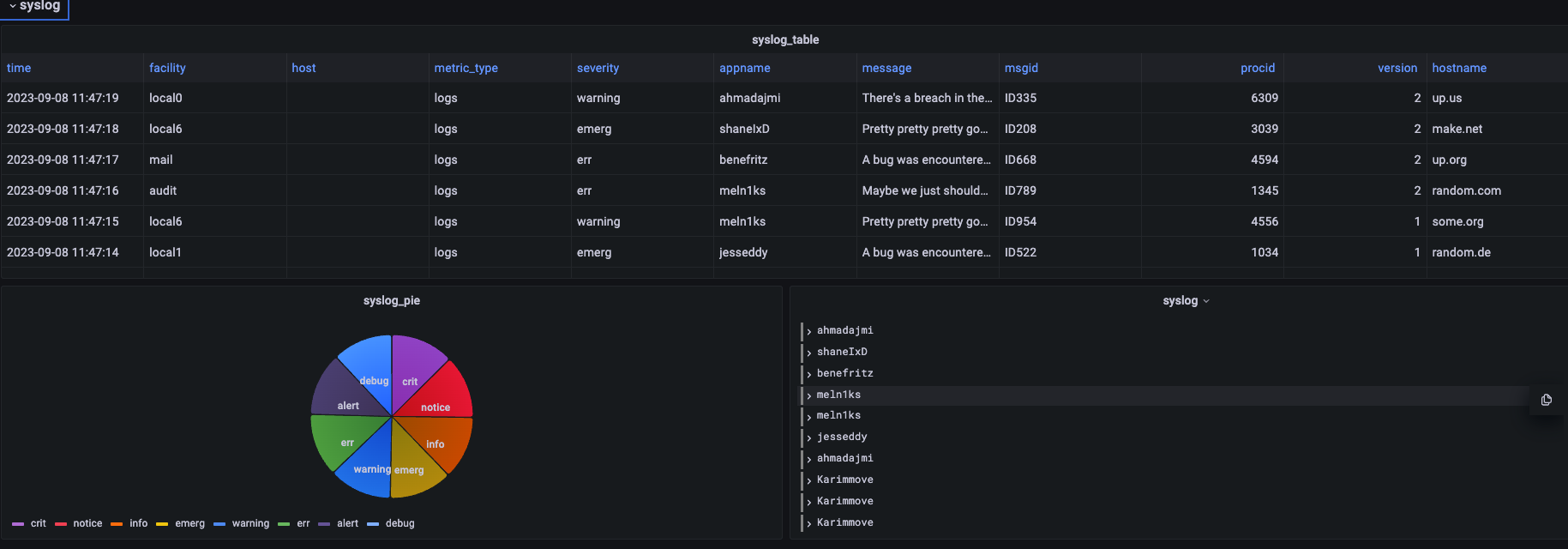
可视化展示 :通过 Grafana 等可视化工具,将分析结果以图表或仪表盘的形式展示,便于监控和分析。
CnosDB 集成日志组件配置用例
Vector
# Change this to use a non-default directory for Vector data storage:


data_dir =
"/var/lib/vector"


# Random Syslog-formatted logs


[sources.logs]


type =
"file"


include =
[
"/tmp/cnosdb/1001/log/tsdb.log.*"
]


# Parse Syslog logs


# See the Vector Remap Language reference for more info: https://vrl.dev


[transforms.parse_logs]


type =
"remap"


inputs =
[
"logs"
]


source =
'''


. = parse_regex!(.message, r'
^(?P<time>.+?)\s+(?P<level>\w+)\s+(?P<compont>.+?):\s+(?P<message>.+)$')


.timestamp = parse_timestamp!(.time, format:
"%Y-%m-%dT%H:%M:%S%.f%:z")


del(.time)


._tenant =
"cnosdb"


._database =
"public"


._table =
"cnosdb_log_test"


._user =
"root"


._password =
""


'''


[sinks.cnosdb]


type = "vector"


inputs = ["parse_logs"]


address = "127.0.0.1:12006"
Promtail
server
:


  http_listen_port
:
9080


  grpc_listen_port
:
0


positions
:


  filename
: /tmp/positions.yaml


clients
:


  -
url
: http
://localhost
:8902/api/v1/es/_bulk?db=prometail&table=table4&log_type=loki


    basic_auth
:


      username
: root


      password
:


scrape_configs
:


-
job_name
: system


  static_configs
:


  -
targets
:


      - localhost


    labels
:


      job
: varlogs


      __path__
: /var/log/*log


      stream
: stdout
Logstash
input
{


stdin
{


}


file
{


path =>
"/var/log/system.log"


start_position =>
"beginning"


}


beats
{


port =>
5044


}


}


output
{


elasticsearch
{


hosts =>
[
"http://localhost:8902/api/v1/es/"
]


custom_headers => {


Authorization =>
"Basic cm9vdDo="


}


parameters => {


"db" =>
"logstash"


"table" =>
"table1"


}


}


}
Filebeat
filebeat.inputs
:


-
type
: filestream


  id
: my-filestream-id


  enabled
:
true


  paths
:


    - /var/log/*.log


output.elasticsearch
:


  hosts
: [
"http://localhost:8902/api/v1/es/"
]


  username
:
"root"


  password
:
""


  parameters
:


    table
:
"table1"
Fluent-bit
[SERVICE]


    Flush           5


    Daemon          off


    Log_Level       debug


[INPUT]


    Name         dummy


    Tag          cpu.local


    Interval_Sec 1


[OUTPUT]


    Name  http


    Match *


    Host  localhost


    Port  8902


    Format json_lines


    URI   /api/v1/es/_bulk?table=fluent&time_column=date&log_type=ndjson


    http_User root


    json_date_format iso8601
通过以上方式将数据写入到 CnosDB后,可以在 Grafana 或其他日志分析工具中进行查询。
结论
日志记录与分析是实现系统可观测性的关键环节。CnosDB 提供了高效的日志存储和分析能力,帮助开发者和运维人员快速定位问题、监控系统健康,并提升整体运维效率。通过结合日志分析与可视化工具,团队可以更深入地了解系统的运行状态,从而作出更明智的决策。
这种日志记录与分析的方式,不仅提升了系统的可靠性,也为企业提供了更好的用户体验。
结语
来自 “ ITPUB博客 ” ,链接:https://blog.itpub.net/70026635/viewspace-3051050/ ,如需转载,请注明出处,否则将追究法律责任。

最新文章
- 📢 2025 First LOOK! CnosDB 新版本 2.4.3.1 发布 📢
- CnosDB元旦福利 | 小日常大惊喜?
- CnosDB向EMQX实时推送消息,实现端到端的数据实时流转
- 📢 CnosDB 新版本 2.4.3 Aries 发布:新增特性与优化一览 📢
- 📢 重磅更新:CnosDB 2.3.5.4 版本上线, 性能提升,问题修复一网打尽 📢
- KubeEdge、ThingsBoard 和 CnosDB:智能物联网平台的完美组合
- 深入探索 CnosDB 可观测性最佳实践:开篇
- CnosDB 2.4.2:从 vnode 到 replicas 的演变
- CnosDB 实时流式计算:优化时序数据处理与降采样解决方案
- CnosDB 元数据集群 – 分布式时序数据库的大脑
