线程的常用函数
4)回收线程资源
所需头文件:
#include <pthread.h>
int pthread_join(pthread_t thread, void **retval);
功能:
等待线程结束(此函数会阻塞),并回收线程资源,类似进程的 wait() 函数。如果线程已经结束,那么该函数会立即返回。
参数:
thread:被等待的线程号。
retval:用来存储线程退出状态的指针的地址。
返回值:
成功:0
失败:非 0
示例代码如下:
#include <stdio.h>
#include <unistd.h>
#include <pthread.h>
void *thead(void *arg)
{
static int num = 123; //静态变量
printf("after 2 seceonds, thread will return\n");
sleep(2);
return #
}
int main(int argc, char *argv[])
{
pthread_t tid;
int ret = 0;
void *value = NULL;
// 创建线程
ret = pthread_create(&tid, NULL, thead, NULL);
if(ret != 0){ //创建失败
perror("pthread_create");
}
// 等待线程号为 tid 的线程,如果此线程结束就回收其资源
// &value保存线程退出的返回值
pthread_join(tid, &value);
printf("value = %d\n", *( (int *)value ) );
return 0;
}
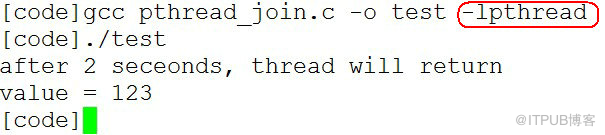
运行结果如下:
创建一个线程后应回收其资源,但使用 pthread_join() 函数会使调用者阻塞,Linux 还提供了非阻塞函数 pthread_detach() 来回收线程的资源。
所需头文件:
#include <pthread.h>
int pthread_detach(pthread_t thread);
功能:
使调用线程与当前进程分离,分离后不代表此线程不依赖与当前进程,线程分离的目的是将线程资源的回收工作交由系统自动来完成,也就是说当被分离的线程结束之后,系统会自动回收它的资源。所以,此函数不会阻塞。
参数:
thread:线程号。
返回值:
成功:0
失败:非 0
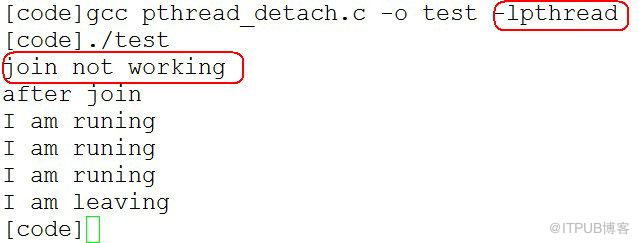
注意,调用 pthread_detach() 后再调用 pthread_join() , pthread_join() 会立马返回,调用失败。
示例代码如下:
#include <stdio.h>
#include <unistd.h>
#include <pthread.h>
void *thead(void *arg)
{
int i;
for(i=0; i<5; i++)
{
printf("I am runing\n");
sleep(1);
}
return NULL;
}
int main(int argc, char *argv[])
{
int ret = 0;
pthread_t tid;
ret = pthread_create(&tid, NULL, thead, NULL);
if(ret!=0){
perror("pthread_create");
}
pthread_detach(tid); // 线程分离,不阻塞
// 立马返回,调用失败
int flag = pthread_join(tid, NULL);
if(flag != 0){
printf("join not working\n");
}
printf("after join\n");
sleep(3);
printf("I am leaving\n");
return 0;
}
运行结果如下:
5)线程退出
在进程中我们可以调用 exit() 函数或 _exit() 函数来结束进程,在一个线程中我们可以通过 pthread_exit() 在不终止整个进程的情况下停止它的控制流。
所需头文件:
#include <pthread.h>
void pthread_exit(void *retval);
功能:
退出调用线程。一个进程中的多个线程是共享该进程的数据段,因此,通常线程退出后所占用的资源并不会释放。
参数:
retval:存储线程退出状态的指针。
返回值:
无
示例代码如下:
#include <stdio.h>
#include <unistd.h>
#include <pthread.h>
void *thread(void *arg)
{
static int num = 123; //静态变量
int i = 0;
while(1)
{
printf("I am runing\n");
sleep(1);
i++;
if(i==3)
{
pthread_exit( (void *)&num );
// return #
}
}
return NULL;
}
int main(int argc, char *argv[])
{
int ret = 0;
pthread_t tid;
void *value = NULL;
ret = pthread_create(&tid, NULL, thread, NULL);
if(ret!=0){
perror("pthread_create");
}
pthread_join(tid, &value);
printf("value = %d\n", *(int *)value );
return 0;
}
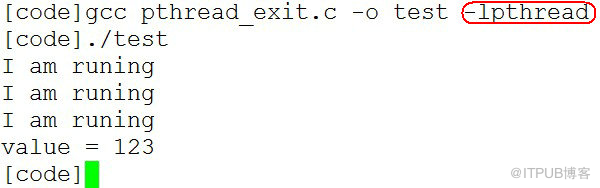
运行结果如下:
来自 “ ITPUB博客 ” ,链接:https://blog.itpub.net/69914734/viewspace-2657289/ ,如需转载,请注明出处,否则将追究法律责任。

