1、所要解决的问题
在前面的相同专辑文章中,跟大家介绍过虚函数,其中提到了基类的指针可以指向派生类,同时基类的引用也可以成为派生类的别名。
比如是非常经典的例子:
#include <iostream>
using namespace std;

class Parent
{
 public:
  virtual void print(void)
  {
   cout<<"Parent print"<<endl;
  }
};


class Child: public Parent
{
 public:
  void print(void)
  {
   cout<<"child print"<<endl;
  }
};

void Test1(Parent *ptr)
{
    ptr->print();
}

void Test2(Parent& p)
{
    p.print();
}

int main(int argc, char** argv) {

    Child child;
    Parent parent;

    Test1(&child);
    Test1(&parent);

    Test2(child);
    Test2(parent);

    return ;
}
这样其输出的结果如下:
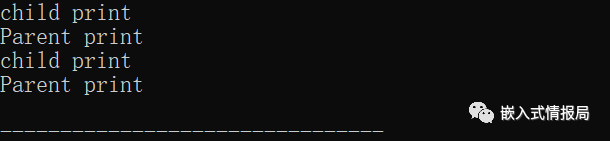
由于存在虚函数的重写,所以其函数调用都是跟随传入的对象类型,这就是多态;当然如果此例子中Parent类中的print没有virtual虚函数标识,则编译器会认为传入的就是父类指针,从而只会调用父类的成员。
而从Test1或者Test2对象内部看来并不能知道传参是子类型还是父类型:
void Test1(Parent *ptr)
{
    Child* ptrChild = (Child *)ptr;

    ptrChild->dosomething(); //调用派生类成员
}
如上代码如果传入的参数是子类对象,那么函数内部用子类类型指向该对象是正常运行的,但如果此时传入的是父类对象,而强制转化为子类指针来使用,则程序就有可能出现未知错误。
所以这里也引出来两个概念:静态类型与动态类型
静态类型:即编译期间所确定的变量类型;
动态类型:在运行过程中指针或者引用所指向对象的实际类型。
基于上面的风险,我们急需有一种手段来识别变量的动态类型,以进行相应的处理,我们通常叫其为:RTTI(Run-Time Type Identification,运行时类型识别)
2、进行动态类型识别的方法
进行动态类型识别的方法挺多的,比如利用多态对派生类进行相应ID的标识等等,不过推荐还是采用typeid的方式。
typeid关键字能够获得任意变量的类型信息,也是C++专门提供用于类型识别的方式。
那么下面我们就用一个例程在看看typeid如何使用的:
#include <iostream>
#include <typeinfo>

using namespace std;

class Parent
{
 public:
  virtual void print(void)
  {
   cout<<"Parent print"<<endl;
  }
};


class Child: public Parent
{
 public:
  void print(void)
  {
   cout<<"child print"<<endl;
  }

  void dosomething(void)
  {
   cout<<"dosomething"<<endl;
  }
};

void Test1(Parent *ptr)
{

    if( typeid(*ptr) == typeid(Child) ) //具体使用方式 Child
    {
      Child* ptrChild = dynamic_cast<Child*>(ptr);

        cout<<"**Dynamic Type: "<<"Child"<<endl;
  ptrChild->dosomething();

    }
    else if( typeid(*ptr) == typeid(Parent) ) //Parent
    {
        cout<<"**Dynamic Type: "<<"Parent"<<endl;
        ptr->print();
    }

}

void Test2(Parent& p)
{
    if( typeid(p) == typeid(Child) ) //具体使用方式 Child
    {
       Child& ptrChild = (Child&)p;

        cout<<"**Dynamic Type: "<<"Child"<<endl;
        ptrChild.dosomething();

    }
    else if( typeid(p) == typeid(Parent) ) //Parent
    {
        cout<<"**Dynamic Type: "<<"Parent"<<endl;
        p.print();
    }
}

int main(int argc, char** argv) {

    Child child;
    Parent parent;

    Test1(&child);
    Test1(&parent);

    cout<<endl;

    Test2(child);
    Test2(parent);

    cout<<endl;

    const type_info& tparent = typeid(parent);
    const type_info& tchild = typeid(child);

    cout<<tparent.name()<<endl;
    cout<<tchild.name()<<endl;

    return ;
}
其输出结果如下:

结果看每种指针或者引用的类型均可以动态且正确的获得识别,挺方便的。
最后有几点需要注意下:
1、typeid返回值是名为type_info的标准库类型的对象引用。
2、type_Info的name返回的是一个字符串,且其类名与实际程序中类型不一定是一致的,但是肯定是唯一标识字符串,通过上面输出结果大家也是可以了解到的。
最 后
好了,这里小哥就简单介绍了C++中动态识别机制的使用,本系列文章后续还会更新,记得关注学习哦。
原文链接:https://mp.weixin.qq.com/s/hXlVsZ_9TaiUYJSY_16tPA
来自 “ ITPUB博客 ” ,链接:https://blog.itpub.net/615/viewspace-3143367/ ,如需转载,请注明出处,否则将追究法律责任。

