JavaScript ES6 Fetch API时需要注意的一个Cookie问题
When I am doing a test of comparison between Stateful and Stateless BSP application ( mentioned in blog Stateless and Stateful – Different behavior in application side ), I meet with a strange issue.
The conclusion is stateful BSP application will handle request sequentially. Suppose in client I send two request A and B to server. Request A takes 3 seconds to finish and B 2 seconds.

The request is sent via jQuery API. It means for stateful application, I will observe the following timeline in Chrome network tab:
(1) the start time of both request are almost the same, since I send out two request in client code almost at the same time. (2) even though the second request itself takes 2 seconds to finish, the total processing time for it is 3 seconds waiting for A to finish first + 2 seconds = 5 seconds in the end.

The above test did verify the conclusion. However when I change the approach to send request into ES6 fetch API,
<%@page language="abap" %><%@extension name="htmlb" prefix="htmlb" %><!DOCTYPE html><html><head><title>Jerry Test Stateful</title></head><body><button onclick="fire()">Fire two request</button><script>function wrapperOnFetch(url){
  fetch(url).then(function(response){
    return response.json();
  }).then(function(json){
      console.log(url + ":" + json.message);
  });}function fire(){
  wrapperOnFetch("first.json");
  wrapperOnFetch("second.json");}</script></body></html>
the testing request for stateful application looks as below this time:

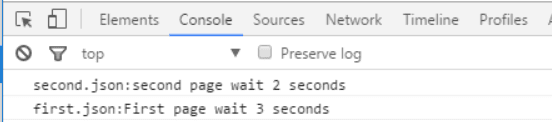
The two requests are handled simultaneously ( request B only takes 2 seconds to finish, no 3 seconds’ wait time for A to finish this time ), the response of second request returns first before the first, which could be observed in console:
why the latest ES6 API causes such discrepancy with known conclusion? Just compare the cookie of requests sent via these two kinds of API:


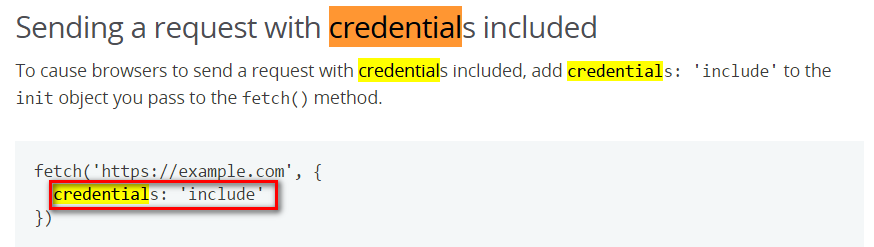
Through comparison I get to know that the session cookie sap-contextid is not sent together with request triggered by ES6 Fetch API. Then in Fetch documentation I find out that I need to add option credentials: “include”.
function wrapperOnFetch(url){
 // enable session cookie sent with request  fetch(url,{ credentials:"include" }).then(function(response){
    return response.json();
  }).then(function(json){
      console.log(url + ":" + json.message);
  });}
After this change the stateful BSP application behaves as expected: the requests are handled in sequence.
要获取更多Jerry的原创文章,请关注公众号"汪子熙":

来自 “ ITPUB博客 ” ,链接:https://blog.itpub.net/24475491/viewspace-2703941/ ,如需转载,请注明出处,否则将追究法律责任。

